
In This Guide
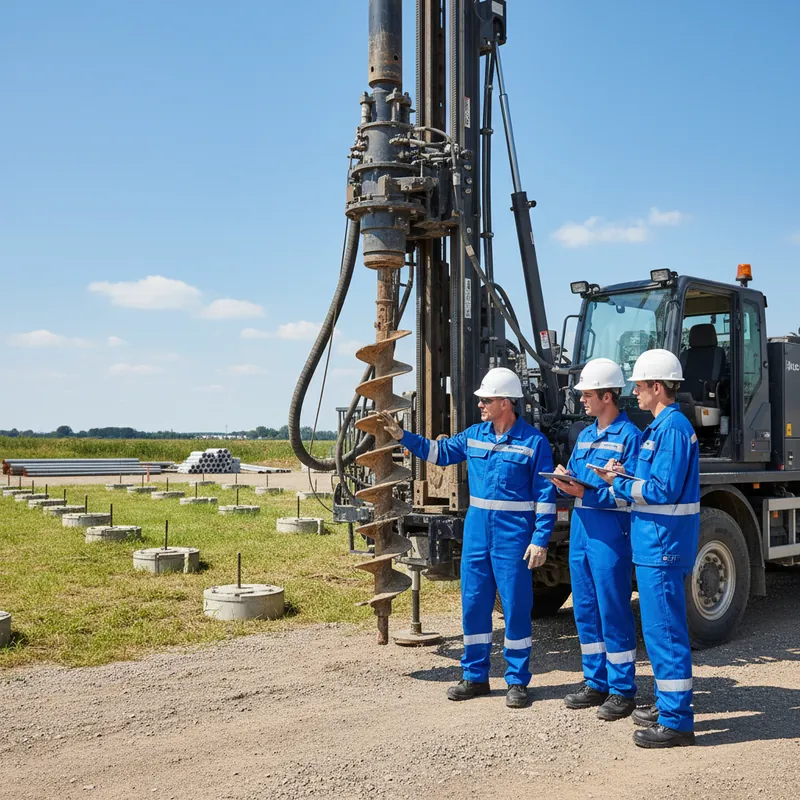
The geothermal heat pump industry is growing, and it needs people who know what they're doing.
If you're an HVAC contractor, plumber, well driller, or mechanical contractor thinking about adding geothermal to your services — or if you're already doing geothermal work and want to formalize your credentials — this guide is for you.
The centerpiece of geothermal industry certification is IGSHPA — the International Ground Source Heat Pump Association. They've been the credentialing authority for this industry since 1987, and in 2025-2026, they've completely overhauled their training programs to be more modular, more accessible, and more aligned with how the industry actually works today.
Here's what you need to know.
Why Get Certified?
Let's start with the bottom line. Why should a busy contractor invest time and money in geothermal certification?
1. The Market Is Growing — Fast
The federal 30% tax credit under Section 25D has made geothermal installations financially viable for millions of homeowners who couldn't justify it before. State-level incentives are expanding. Utility rebate programs are multiplying. And building electrification mandates are pushing more homes away from gas and toward high-efficiency electric heating.
All of that demand needs installers. Right now, the biggest bottleneck in the geothermal industry isn't technology or cost — it's workforce capacity. There aren't enough trained, certified installers to meet demand. That's a business opportunity.
2. Utility Programs Require It
Many utility rebate programs either require or strongly prefer IGSHPA-certified contractors. If you want access to utility incentive programs — which help your customers afford the systems you're selling — certification gets you in the door.
Some state energy efficiency programs, like Oregon's Energy Trust Trade Ally network or Idaho Power's rebate programs, use contractor qualification criteria that align with IGSHPA certification.
3. Homeowners Ask for It
We tell every homeowner who reads this site to ask their installer about IGSHPA certification. Sites like ours, the DOE's Energy Saver resources, and ENERGY STAR all recommend working with certified professionals. Certification is a competitive differentiator that wins jobs.
4. Quality Installations Protect Your Reputation
A geothermal system is a 50-year infrastructure investment (the ground loop, at least). A poorly designed or installed system won't deliver promised efficiency, leading to unhappy customers, warranty claims, and reputation damage. Proper training reduces callbacks, improves system performance, and builds the kind of customer satisfaction that drives referrals.
IGSHPA: The Industry Standard
The International Ground Source Heat Pump Association, based at Oklahoma State University, is the geothermal heat pump industry's primary credentialing organization. Founded in 1987, IGSHPA develops training curricula, certification programs, and industry standards used worldwide.
The CSA Partnership
In their latest program overhaul, IGSHPA has partnered with CSA Group (formerly the Canadian Standards Association) to deliver accredited training and certification. CSA is a globally recognized standards development and testing organization. This partnership adds weight and formal accreditation to IGSHPA certifications.
All new training is based on the CSA/ANSI/IGSHPA C448:25 Series — the Design and Installation Standard for Commercial and Residential GSHP Applications. This is the industry's definitive standard, and it's the backbone of the new certification programs.
What Changed in 2025-2026
IGSHPA completely restructured their training in 2025-2026. The key changes:
- Modular courses: Instead of one big course, training is broken into specialized modules aligned with specific job functions. You take what's relevant to your role.
- More than 20 course options: From self-paced online modules to instructor-led workshops, there are paths for every learning style and schedule.
- Job-specific certifications: Separate tracks for installers, designers, service techs, inspectors, and drillers — instead of one-size-fits-all.
- Self-paced core modules: 7 foundational modules that you can complete online at your own pace, then apply toward various certifications.
Certification Paths and Programs
The new IGSHPA/CSA certification structure has distinct paths depending on your role in the industry:
| Certification | Abbreviation | For | Format |
|---|---|---|---|
| GSHP Residential Installation Technician | GRIT | HVAC installers, technicians | Modular (online + hands-on) |
| Ground Heat Exchanger Installer | GHXI | Well drillers, excavators | Modular (online + hands-on) |
| GSHP Residential Service Technician | GRST | Service techs, maintenance pros | Modular (online + hands-on) |
| GSHP Residential System Designer | GRSD | Residential HVAC designers | Core modules + 2-day workshop |
| GSHP Commercial System Designer | GCSD | Commercial/mechanical engineers | Core modules + 2-day workshop |
| GSHP System Verification & Inspection | GSVI | Code officials, project managers | Online, self-paced |
The 7 Core Modules
The foundation of the new system is a set of 7 self-paced online modules that cover the fundamentals of ground-source heat pump technology. These modules serve as prerequisites for the design workshops and provide foundational knowledge for all certification tracks.
Experienced HVAC professionals can skip modules where they already have expertise — you decide which ones you need based on your background. New entrants to the geothermal field should plan to complete most or all of them.
The Installer Track (Detailed)
The installer track is the most relevant path for HVAC contractors looking to add geothermal to their business. It's been modularized into two complementary certifications:
GRIT — GSHP Residential Installation Technician
This is the core installer certification. It covers:
- Heat pump equipment installation and startup
- Ductwork and air distribution for heat pump systems
- Refrigerant piping and connections
- Electrical connections and controls
- System commissioning and performance verification
- Compliance with the C448:25 standard
If you're an existing HVAC contractor who wants to install geothermal indoor units and connect them to loop fields, GRIT is your certification.
GHXI — Ground Heat Exchanger Installer
This certification is specifically for the outdoor/underground portion of the installation — the ground loop. It covers:
- Borehole drilling for vertical loops
- Trenching for horizontal loops
- Loop piping materials and connections (HDPE fusion, etc.)
- Grouting and backfilling
- Pressure testing and flushing
- Well construction standards and compliance
If you're a well driller or excavation contractor looking to serve the geothermal market, GHXI is your path. Many geothermal installations involve an HVAC contractor (GRIT-certified) partnering with a drilling contractor (GHXI-certified) — understanding both roles helps you work together effectively.
GRST — GSHP Residential Service Technician
For technicians focused on servicing and maintaining existing geothermal systems:
- Troubleshooting heat pump performance issues
- Diagnosing loop field problems
- Refrigerant system service
- Controls and thermostat programming
- Preventive maintenance best practices
As the installed base of geothermal systems grows, service work becomes a steady, recurring revenue stream. Getting certified in service now positions you for a growing maintenance market.
The Design Track (Detailed)
The design certifications are for professionals who size, specify, and engineer geothermal systems — not just install them.
GRSD — GSHP Residential System Designer
The residential design certification combines the self-paced core modules with a 2-day instructor-led workshop. It covers:
- Heating and cooling load calculations
- Ground loop sizing and design
- Equipment selection and specification
- System hydraulics and flow rates
- Integration with existing home infrastructure
- Performance modeling and prediction
This is the certification for HVAC contractors who want to design and install complete residential geothermal systems — handling both the above-ground and below-ground components. It replaces the legacy Certified GeoExchange Designer (CGD) credential for residential applications.
GCSD — GSHP Commercial System Designer
The commercial design track adds complexity: larger buildings, shared loop fields, more sophisticated controls, and integration with other building systems. The commercial workshop is also based on the ASHRAE Geothermal Design Manual ("The Blue Book") in addition to the C448 standard.
This certification targets mechanical engineers, commercial HVAC designers, and contractors working on commercial, institutional, or multi-family projects.
Other Certifications and Legacy Programs
Legacy IGSHPA Certifications
If you hold an older IGSHPA certification — such as the Accredited Installer or Certified GeoExchange Designer (CGD) — those credentials are still recognized in the industry. The new modular programs build on and eventually replace the legacy courses, but existing certifications remain valid.
IGSHPA has information on legacy programs on their training and certification page.
State Licensing Requirements
IGSHPA certification complements — but doesn't replace — state-specific licensing requirements. Most states require:
- HVAC contractor license for the indoor unit installation and refrigerant work
- Well driller license for vertical borehole drilling (issued by your state's water resources department)
- General contractor license for the overall project in some states
- EPA Section 608 certification for handling refrigerants
Check your state's requirements. Our state guides include permitting and licensing information for each state.
NATE Certification
The North American Technician Excellence (NATE) certification is the broader HVAC industry's technician credential. While it doesn't specifically cover geothermal, having NATE certification alongside IGSHPA credentials signals a well-rounded HVAC professional.
The Business Case for Geothermal
This section is for the business owners in the room. Beyond the training, is adding geothermal to your HVAC business worth it?
Higher Revenue per Job
A typical residential air-source heat pump installation might bill $8,000–$15,000. A residential geothermal installation bills $25,000–$50,000. The margins are better because the complexity and expertise barrier is higher — fewer competitors can do this work.
Less Competition
Every HVAC company installs air-source systems. Far fewer offer geothermal. In many markets, the number of certified geothermal installers can be counted on one hand. That scarcity means less price competition and more pricing power.
Recurring Revenue
Every geothermal system you install becomes a maintenance customer. The systems need annual checkups, and homeowners prefer the installer who put the system in. As your installed base grows, so does your service revenue.
Utility Program Access
Being a certified geothermal installer qualifies you for utility incentive programs and trade ally networks. These programs send you leads — homeowners looking for qualified contractors who can process rebate paperwork. That's marketing you don't have to pay for.
Market Timing
The geothermal industry is in a growth phase similar to where solar was 10–15 years ago. The contractors who established solar expertise early captured significant market share as the industry matured. The same dynamic is playing out with geothermal. Getting certified now positions you ahead of the wave.
What It Takes to Get Started
Realistically, here's what adding geothermal requires:
- Training investment: IGSHPA courses and certification exams — budget several hundred to a few thousand dollars per person, depending on the certification level
- Time investment: Core modules are self-paced; workshops are 2 days. Total training can be completed in weeks, not months.
- Equipment: For the indoor unit installation, most HVAC companies already have the tools. The ground loop (drilling/trenching) is typically subcontracted to a drilling company unless you want to invest in drilling equipment.
- Partnership model: Many HVAC companies partner with a local well driller rather than buying their own drill rig. The HVAC company handles system design, indoor installation, and customer relationship. The driller handles boreholes. This is a proven model that minimizes your capital investment.
💡 IGSHPA Member Discount
IGSHPA members receive a 25% discount on CSA/IGSHPA training courses. Membership also includes access to tech tip videos, industry resources, and the member directory (which homeowners search when looking for installers). Visit the IGSHPA membership page for current rates.
Getting Started: Action Plan
Here's a practical roadmap for an HVAC contractor who wants to add geothermal services:
-
Join IGSHPA
Membership gets you the training discount, industry resources, and listing in their contractor directory. Visit igshpa.org/membership.
-
Purchase the C448:25 Standard
This is the industry's design and installation standard. All training is based on it. IGSHPA members get a discounted PDF.
-
Complete Relevant Core Modules
Self-paced, online. Work through them based on your existing knowledge gaps. Experienced HVAC pros may skip some; newcomers to geothermal should plan to complete most.
-
Choose Your Certification Path
Most HVAC contractors start with GRIT (installer) and/or GRSD (residential designer). If you want to design and install complete systems, you'll want both.
-
Find a Drilling Partner
Unless you're already in the drilling business, find a local well driller or excavation company interested in geothermal work. Many drillers are pursuing GHXI certification. Building this relationship before your first project makes everything smoother.
-
Do Your First Project
Start with a project you know — your own home, a family member's, or a trusted customer who's patient. Your first geothermal installation will take longer than subsequent ones. That's normal.
-
Register with Your Utility's Program
Check whether your local utility has a heat pump rebate program or trade ally network. Getting listed makes you visible to homeowners actively looking for installers.
-
Scale Up
Once you've completed a few successful installations, you'll have references, photos, and experience to market. Geothermal customers tend to be affluent homeowners who make decisions based on quality and expertise, not lowest price. Position accordingly.
The geothermal industry needs more qualified installers. The training infrastructure is better than it's ever been. The market demand is growing. And the contractors who move now will have a multi-year head start on everyone else. If you're in the HVAC business and you're reading this far — it's probably time to make the call.
Learn more: IGSHPA Training & Certification | IGSHPA Training Calendar
Key Takeaway for Contractors
IGSHPA certification is the industry standard and increasingly required by state programs. The investment (~$500 for exam + course, 40–80 hours of study) pays for itself quickly — certified geothermal installers command $55–85K salaries and the market is growing 12%+ annually. With the 30% federal tax credit driving homeowner demand, there's never been a better time to add geothermal to your HVAC business.
Sources
- IGSHPA — "Training & Certification"
- IGSHPA — "Certification Paths"
- IGSHPA — "Membership"
- CSA Group — CSA/ANSI/IGSHPA C448:25 Series
- U.S. DOE — "Geothermal Heat Pumps"
- IRS — "Residential Clean Energy Credit" (Section 25D)