
In This Guide
- Why Wyoming Is Secretly Great for Geothermal
- Quick Verdict: Should You Go Geothermal?
- Does Geothermal Work in Extreme Cold?
- Wyoming Geology: Basins, Aquifers & Yellowstone
- Geology & Drilling Conditions by Region
- Regional Costs & ROI
- Case Study: Jackson Hole Propane Luxury Home
- Case Study: Casper Gas Home — An Honest Look
- Case Study: Sheridan Ranch New Construction + REAP
- Month-by-Month Energy Profile
- Open-Loop System Assessment by Region
- Loop Type Cost Comparison
- Incentive Stacking: Federal ITC & USDA REAP
- Solar + Geothermal: Wyoming's Untapped Combo
- Permits & Licensing Requirements
- Finding & Vetting a Qualified Installer
- Maintenance & System Longevity
- Vacation Rental & Tourism Property Economics
- How to Claim the Federal Tax Credit (IRS Form 5695)
- Wyoming vs. Neighboring States
- Frequently Asked Questions
- Bottom Line
- Sources
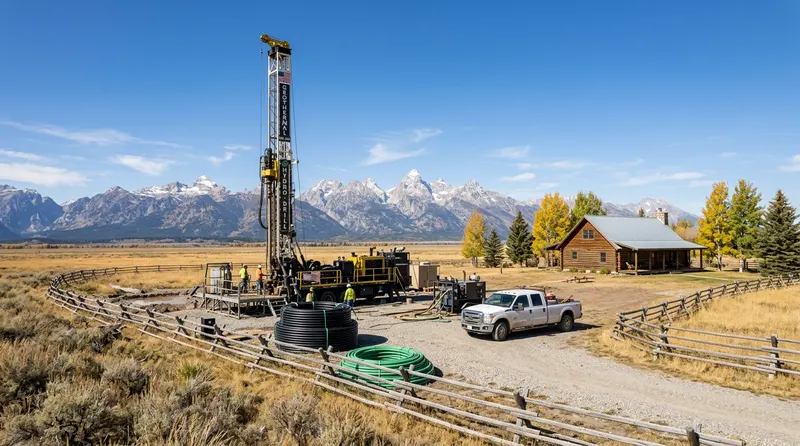
Why Wyoming Is Secretly Great for Geothermal
Here's the paradox of Wyoming and geothermal energy: you're living in a state literally defined by geothermal forces — Old Faithful erupts on schedule, Yellowstone's hot springs draw millions of visitors annually, and the entire northwestern corner sits atop one of the planet's most active volcanic hotspots — yet almost nobody in Wyoming heats their home with a ground-source heat pump.
That's not because geothermal heat pumps don't work here. It's because Wyoming has been so flush with cheap fossil fuels for so long that nobody's had to think very hard about alternatives. When you're sitting on top of the Powder River Basin's coal deposits and natural gas is piped in from fields just down the road, a $25,000 geothermal system feels like an extravagance.
But the equation is shifting — and it's shifting faster than most Wyomingites realize.
Three factors are converging to make geothermal heat pumps genuinely interesting in Wyoming right now:
- The cheapest electricity in America. Wyoming's average residential electricity rate is just 9.14¢/kWh (EIA 2024) — ranking 47th out of 50 states, meaning only three states pay less. That wind energy rolling across the high plains isn't just good for turbines; it's producing electricity at wholesale prices that make geothermal heat pump operating costs absurdly low. When your COP is 4.0 and your electricity costs 9¢, you're heating your home for the equivalent of $0.50/therm natural gas.
- Massive properties with room for horizontal loops. Wyoming is the least populated state in the nation — roughly 577,000 people spread across 97,813 square miles. The average ranch property is measured in sections, not lots. That means horizontal ground loops, which are the cheapest type of geothermal installation by a wide margin, are available to an enormous percentage of Wyoming homeowners. No drilling rig needed. Just a backhoe, some pipe, and a few acres you weren't using anyway.
- Propane and electric resistance heating are shockingly common. Once you get outside Cheyenne, Casper, and a handful of gas-served towns, Wyoming homeowners are heating with propane, fuel oil, or electric resistance. And those fuels are expensive — especially propane, which can top $3.50/gallon in remote areas during peak winter. For those households, geothermal doesn't just make sense; it's potentially the most impactful energy investment they'll ever make.
Let's be honest about what also makes Wyoming challenging: the installer base is tiny, winter temperatures are brutal (we're talking -30°F in Pinedale), and if you heat with cheap piped natural gas in Cheyenne, the payback math gets tough. This guide will walk through all of it — the good, the bad, and the honest numbers.
Quick Verdict: Should You Go Geothermal in Wyoming?
| Your Situation | Verdict | Typical Payback |
|---|---|---|
| Rural ranch — propane heating | ✅ Wyoming's best case by far | 5–8 years |
| Any region — electric resistance heating | ✅ Immediate savings at 9¢ electricity | 4–7 years |
| New construction — any location | ✅ Lowest incremental cost in nation | 4–8 years |
| USDA REAP eligible — agricultural property | ✅ Up to 50% cost coverage | 2–5 years |
| Jackson Hole — luxury propane home | ✅ Premium payback + comfort | 6–10 years |
| Cheyenne — natural gas heating | ⚠️ Honest: long payback at cheap gas rates | 14–20 years |
| Replacing aging air-source heat pump | ✅ Performance leap in extreme cold | 7–12 years |
| Vacation rental — Jackson/Cody/Saratoga | ✅ High usage + guest marketing value | 7–12 years |
Does Geothermal Work in Extreme Cold?
This is the single most common objection I hear from Wyoming homeowners, and it deserves a thorough answer: "If it's -25°F outside, how can a heat pump possibly keep up?"
The short answer: because a geothermal heat pump isn't extracting heat from the frigid outside air. It's extracting heat from ground that stays between 45°F and 52°F year-round, even when the surface is buried under three feet of snow.
Air-source heat pumps lose efficiency dramatically as outdoor temperatures drop. At 0°F, even the best cold-climate mini-splits are running at a COP of maybe 1.5 to 2.0. At -20°F, most switch to pure electric resistance backup. They're essentially space heaters at that point.
Ground-source heat pumps don't have this problem. The ground temperature at 6–8 feet of depth in Wyoming ranges from about 45°F in the northwestern mountains to 52°F in the southeastern plains. That temperature doesn't change whether it's July or January. So when your geothermal system fires up during a January cold snap in Lander, it's not trying to extract heat from -15°F air — it's pulling heat from 48°F ground.
In fact, Wyoming's extreme cold actually strengthens the case for geothermal. The colder it gets outside, the worse air-source heat pumps perform — but geothermal performance stays flat. The efficiency advantage over air-source systems is greatest during the coldest weather, which is exactly when you need it most.
Wyoming communities commonly see 7,500 to 9,500 heating degree days (HDD) annually. Jackson Hole sees around 9,400 HDD. Pinedale often exceeds 10,000. All of these heating loads are well within the design parameters of modern geothermal systems — they just need to be sized properly, which means adequate loop field length and possibly a slightly larger unit than you'd install in Virginia.
One practical consideration: in Wyoming's climate, you'll want a supplemental electric resistance element in the air handler for genuine emergencies — the kind of -35°F, three-day event that occasionally hits the Wind River Valley. This isn't because the geothermal can't handle it; it's insurance for abnormal conditions. A well-designed system should cover 95%+ of your heating load from the ground alone.
Wyoming Geology: Basins, Aquifers & Yellowstone
Wyoming's geology is wildly varied, and that matters for geothermal installation costs and loop design. Let's break down the major regions:
The Powder River Basin (northeastern Wyoming): This is coal country — thick sedimentary deposits of sandstone, shale, and coal. The good news for geothermal: these sedimentary formations are relatively easy to drill through, and the basin holds significant groundwater resources. The Wasatch and Fort Union aquifers provide excellent water supply, which makes open-loop systems a legitimate option around Sheridan, Buffalo, and Gillette. Ground temperatures in this region average 48–50°F at depth.
The Wind River Basin (central Wyoming): Another sedimentary basin with good aquifer resources, though the terrain gets more complex toward the mountain margins. Riverton, Lander, and Thermopolis sit in or near this basin. Drilling conditions are generally favorable in the basin floor, but costs increase as you move toward the mountain fronts where you hit harder formations. Ground temperatures: 46–49°F.
The Bighorn Basin (north-central): Surrounded by the Absaroka Range, Bighorn Mountains, and Owl Creek Mountains, this basin has some interesting geothermal characteristics. The Madison aquifer underlies much of the region, and there are areas near Thermopolis and Cody where ground temperatures are elevated due to deep geological heating. Standard ground temps: 47–50°F, but some areas run warmer.
The Green River and Washakie Basins (southwestern Wyoming): Rock Springs, Green River, and Kemmerer sit in basins with thick sedimentary deposits. Drilling is generally straightforward in valley locations. The Bridger Valley has decent aquifer resources. Ground temperatures: 48–51°F. The trona mining industry in this area means there's existing drilling expertise.
Yellowstone and the Teton region (northwestern Wyoming): The Yellowstone volcanic system creates elevated ground temperatures in some areas. However, the complex volcanic geology means drilling conditions are unpredictable. Most installers in the Jackson Hole area use closed-loop systems and avoid engaging with the volcanic hydrothermal system entirely. Ground temperatures: 44–48°F in Jackson Hole (altitude pulls temperatures down).
The Laramie Basin and southeastern Wyoming: Cheyenne, Laramie, and Torrington sit on a mix of granite (Laramie Range) and sedimentary formations. Ground temperatures: 50–53°F — the warmest in the state, thanks to lower elevation and more southerly latitude.
Geology & Drilling Conditions by Region
Understanding what your driller will encounter underground directly shapes your loop design choice and installation cost. Wyoming's basin-and-range geology creates dramatically different drilling conditions depending on whether you're in sedimentary basin fill, mountain bedrock, or volcanic terrain. Here is a region-by-region breakdown:
| Region | Dominant Geology | Thermal Conductivity (BTU/hr·ft·°F) | Typical Bore Depth | Drilling Cost/ft | Key Challenges |
|---|---|---|---|---|---|
| Powder River Basin (Sheridan / Gillette / Buffalo) | Fort Union/Wasatch sandstone, shale, coal seams, alluvial fill | 0.9–1.3 | 175–250 ft | $11–$15/ft | Coal seams can complicate grouting. Excellent aquifer — open-loop often cheaper than vertical. Very easy drilling in basin fill. |
| Wind River Basin (Riverton / Lander / Thermopolis) | Cretaceous shale, Wind River sandstone, alluvial gravel, some limestone | 0.9–1.3 | 200–275 ft | $12–$16/ft | Mountain-front properties encounter harder formations. Artesian conditions possible near Thermopolis — bonus warm water temperature. |
| Bighorn Basin (Cody / Worland) | Cody Shale, Frontier Formation, Mesaverde sandstone, Madison limestone at depth | 0.9–1.4 | 200–275 ft | $12–$16/ft | Madison aquifer excellent for open-loop near Thermopolis. Shale layers drill easily. Some areas have naturally elevated ground temps (50–60°F). |
| Green River / Washakie Basin (Rock Springs / Green River) | Green River Formation (oil shale, limestone, marlstone), trona evaporite, alluvium | 0.8–1.2 | 200–275 ft | $13–$17/ft | Trona deposits can create brackish water — unsuitable for open-loop without treatment. Existing trona mining drill rigs available. Arid surface delays moisture equilibration. |
| Jackson Hole / Teton Valley | Deep alluvial outwash (Pleistocene glacial), some volcanic intrusions, granitic mountain bedrock | 1.0–1.5 (alluvium) / 1.4–2.0 (granite) | 200–300 ft | $16–$22/ft | Premium labor market. Short drill season (June–Sept). Steep lots require special equipment. Cold alluvial aquifer (42–46°F) slightly reduces heating COP vs. warmer-state wells. |
| Laramie Plains / SE Wyoming (Cheyenne / Laramie) | Prairie soils, High Plains alluvium, Laramie Range granite and gneiss at foothills | 1.0–1.6 | 175–250 ft | $11–$15/ft | Best contractor availability (CO Front Range nearby). Prairie horizontal loops very cost-effective. Granite foothills require vertical only. Ogallala aquifer viable for open-loop near Nebraska border. |
| Yellowstone Plateau / Upper Wind River | Rhyolite, basalt, volcanic tuff, caldera sediments | 0.7–1.1 | 150–250 ft (avoid deep volcanic contact) | $15–$20/ft | Unpredictable formations. Hot springs and hydrothermal features mean chemical contamination risk for open-loop. Low thermal conductivity of tuff requires more bore footage. Horizontal loops preferred where land allows. |
Pre-Drill Research: Wyoming State Engineer Well Logs
Before committing to a vertical loop system in Wyoming, check the Wyoming State Engineer's Office well log database. The state maintains drilling records from water well installations across the state — revealing formation types, water-bearing zones, and drilling rates at various depths. This data is publicly accessible and can help your installer estimate drilling conditions before mobilizing a rig.
In the Powder River, Wind River, and Bighorn basins, dozens of nearby water wells often provide excellent pre-drill intelligence. In Jackson Hole and the Teton Valley, the data is sparser but still valuable for confirming alluvial depth and the presence of cobble layers that can slow drilling. Ask your installer if they've reviewed the SEO well log database for your parcel — any experienced Wyoming driller should do this routinely.
For properties near Thermopolis or the Bighorn Basin hot springs belt, the Wyoming State Geological Survey has published geothermal gradient data that can help predict elevated ground temperatures. Areas where shallow ground temperatures exceed 55°F show meaningfully higher heat pump COPs — sometimes 15–20% better than the statewide average.
Regional Costs & ROI
Installation costs in Wyoming vary significantly by region — driven by drilling conditions, contractor travel distance, and the sheer logistics of working in remote locations. Wyoming has very few dedicated GSHP installers, which means many projects involve contractors traveling from Montana, Colorado, Idaho, or Utah. That travel adds cost.
| Region | Avg System Cost (4-ton) | Loop Type | Ground Temp | Key Challenge |
|---|---|---|---|---|
| Jackson Hole / Teton County | $32,000–$42,000 | Vertical preferred — limited lots, rocky soil | 44–48°F | High labor costs, limited access, short construction season |
| Casper / Central Wyoming | $24,000–$32,000 | Both viable — good soil conditions in valley | 48–50°F | Moderate contractor availability; travel from CO/MT |
| Cheyenne / SE Wyoming | $22,000–$29,000 | Horizontal often possible — flat terrain, deep soils | 50–53°F | Best contractor access (proximity to CO Front Range) |
| Sheridan / NE Wyoming | $25,000–$33,000 | Both viable — good aquifers for open-loop | 48–50°F | Limited local installers; MT contractors closest |
| Rock Springs / SW Wyoming | $26,000–$35,000 | Vertical typical — arid surface, rocky terrain | 48–51°F | Remote location; contractor mobilization adds $2,000–$4,000 |
A critical note: Wyoming's limited installer base is the single biggest barrier to adoption. As of 2026, there are fewer than a dozen contractors in the entire state who regularly install ground-source heat pump systems, and several of those are based in bordering states. Expect longer wait times (3–6 months) and possible mobilization surcharges for remote properties.
The upside of Wyoming's cheap electricity is substantial. At 9.14¢/kWh, a 4-ton system heating a 2,500-square-foot home through a typical Wyoming winter consumes roughly 8,000–10,000 kWh annually — costing $730–$915 per year. The same heating load in propane would cost $3,200–$4,500. Annual savings of $2,300–$3,600 make payback math very favorable for propane-heated homes.
Case Study: Jackson Hole Propane Luxury Home
The Setup
- Location: Wilson, WY (Teton County, 6,200 ft elevation)
- Home: 4,200 sq ft custom home, built 2008
- Current heating: Two propane furnaces (96% AFUE), 1,000-gallon tank
- Annual propane consumption: 1,800 gallons at $3.40/gallon = $6,120/year
- Summer AC + DHW propane: $1,100/year
- Total annual HVAC + DHW: $7,220/year
The Geothermal System
- System: Two 3-ton WaterFurnace 7 Series units (variable speed)
- Loop: Vertical closed-loop — 6 boreholes × 250 ft deep (1,500 ft total)
- Desuperheater: Yes — covers ~60% of domestic hot water
- Total installed cost: $68,000
- Federal ITC (30%): −$20,400
- Net cost: $47,600
The Math
- Annual geothermal electricity (Lower Valley Energy ~10.5¢/kWh): ~16,500 kWh = $1,733/year
- Remaining DHW electric backup: ~$280/year
- Total annual energy cost with geothermal: $2,013/year
- Annual savings: $7,220 − $2,013 = $5,207/year
- Simple payback (after ITC): $47,600 ÷ $5,207 = 9.1 years
- Propane tank rental eliminated: ~$500/year → adjusted payback: 8.3 years
- 20-year net savings: ($5,707 × 20) − $47,600 = $66,540
Verdict: An 8–9 year payback on a system that lasts 25+ years, in a home worth $2M+, is a no-brainer. The homeowner eliminates propane dependence entirely, gains consistent performance at -25°F, and eliminates the hassle of scheduling propane deliveries over Teton Pass in January. The $68,000 price tag is inflated by the "Jackson tax" — the same system would cost $42,000–$48,000 in Cheyenne — but propane costs are also much higher in Teton County, so the payback holds.
Case Study: Casper Gas Home — An Honest Look
The Setup
- Location: Casper, WY (5,150 ft elevation)
- Home: 2,200 sq ft ranch-style, built 1995
- Current heating: 80% AFUE natural gas furnace (Black Hills Energy)
- Annual gas cost: ~850 therms × $0.85/therm = $722/year
- Annual cooling cost: ~$210/year
- Total annual HVAC: $932/year
The Geothermal System
- System: 4-ton ClimateMaster Tranquility 30 (two-stage) + desuperheater
- Loop: Horizontal closed-loop — 1,200 ft of trench in backyard
- Total installed cost: $27,000
- Federal ITC (30%): −$8,100
- Net cost: $18,900
The Math
- Annual geothermal electricity: ~9,200 kWh × 9.14¢ = $841/year
- Annual savings vs. gas: $932 − $841 = $91/year
- Simple payback: $18,900 ÷ $91 = 207 years 😬
The honest verdict: This doesn't work as a pure financial play. Wyoming natural gas is among the cheapest in the nation. When you're replacing cheap gas with cheap electricity, the operating cost gap is minimal. The case improves only if: (1) the furnace is at end of life and you're replacing equipment anyway — incremental cost drops to ~$10,000 after ITC, reducing payback to ~110 years; (2) gas prices rise significantly over time; or (3) you prioritize non-financial benefits — no combustion appliance, no CO risk, consistent comfort at -30°F, combined heating/cooling/DHW in one system. Wyoming propane customers: see the Jackson Hole case study above — the story is completely different.
Case Study: Sheridan Ranch New Construction + REAP Grant
The Setup
A fourth-generation cattle ranching family outside Sheridan builds a new 2,800 sq ft primary residence replacing a deteriorating farmhouse. The property — 640 acres in the foothills of the Bighorn Mountains — has no natural gas service and currently heats the old house with propane ($3,800/year) and electric resistance backup. New construction gives them a clean slate to do it right.
The property sits on Fort Union Formation sediment: easy drilling, good alluvial aquifer at 40–60 ft depth. The ranch qualifies for USDA REAP as an agricultural producer (cattle and hay operations, 80%+ gross income from agriculture).
Conventional New Build Option (What They'd Otherwise Do)
- Propane furnace + central AC: $14,500 installed (builder estimate)
- Estimated annual propane + electric: $3,200/year (heating + cooling + DHW)
The Geothermal System
- Equipment: 4-ton WaterFurnace 5 Series two-stage + desuperheater
- Loop: Open-loop — dual 6" production and injection wells at 55 ft depth (Fort Union aquifer, 8–12 GPM yield)
- Well drilling: $4,800 (two wells × 55 ft × $44/ft — water well contractor, not specialty geo driller)
- Equipment + installation: $16,200
- Ductwork: $0 incremental (designed for heat pump airflow from start)
- Wyoming State Engineer well permit: $350 (dual-use modification to existing water right)
- Total geothermal cost: $21,350
- Incremental over conventional: $21,350 − $14,500 = $6,850
REAP + ITC Stack
| Line Item | Amount |
|---|---|
| Total geothermal system cost | $21,350 |
| USDA REAP grant (35% — competitive round) | −$7,473 |
| Remaining eligible for ITC | $13,877 |
| Federal ITC (30%) | −$4,163 |
| Net out-of-pocket | $9,714 |
| Net incremental over conventional | $9,714 − $14,500 = −$4,786 (geothermal is cheaper!) |
The Math
- Annual geothermal electricity: ~9,800 kWh × 9.14¢ = $896/year
- Annual savings vs. propane option: $3,200 − $896 = $2,304/year
- Net incremental cost after incentives: −$4,786 (they actually save money vs. conventional)
- Payback on incremental (new construction): Immediate — REAP + ITC make geothermal cost less than conventional up front
- 20-year savings vs. conventional (propane): ($2,304 × 20) + $4,786 = $50,866
Verdict: This is the Wyoming geothermal home run. When you stack a competitive REAP grant with the federal ITC on new construction with an open-loop well in a shallow aquifer region, geothermal costs less to install than a propane system — and saves $2,300/year in operating costs for the next 25+ years. The family locked in energy independence for their home, eliminated propane deliveries to a remote ranch, and banked over $50,000 in lifetime savings compared to the conventional option.
The key insight: REAP applications take 3–6 months to process. If you're planning new construction, submit your REAP application before you break ground — not after the slab is poured. The Sheridan County agricultural extension office or the USDA Rural Development office in Casper can walk you through the pre-application process.
Month-by-Month Energy Profile
This profile models a 2,500-square-foot home in Casper (7,400 HDD, 700 CDD) with a 4-ton ground-source heat pump at 9.14¢/kWh.
| Month | Avg Temp (°F) | Mode | Geo kWh | Cost @ 9.14¢ | Propane Equiv. |
|---|---|---|---|---|---|
| January | 24°F | Heating | 1,450 | $133 | $580 |
| February | 27°F | Heating | 1,280 | $117 | $512 |
| March | 35°F | Heating | 1,050 | $96 | $420 |
| April | 43°F | Heating | 720 | $66 | $288 |
| May | 53°F | Shoulder | 350 | $32 | $140 |
| June | 63°F | Cooling | 280 | $26 | N/A |
| July | 72°F | Cooling | 420 | $38 | N/A |
| August | 70°F | Cooling | 360 | $33 | N/A |
| September | 59°F | Shoulder | 250 | $23 | $100 |
| October | 46°F | Heating | 650 | $59 | $260 |
| November | 33°F | Heating | 1,100 | $101 | $440 |
| December | 24°F | Heating | 1,420 | $130 | $568 |
| Annual Total | — | — | 9,330 | $853 | $3,308 |
Wyoming is overwhelmingly heating-dominant — roughly 85% of the geothermal system's annual work is extracting heat from the ground. The monthly geothermal cost never exceeds $133 even in the coldest months, while propane equivalent costs peak at $580. For Jackson Hole (9,400 HDD), multiply heating months by roughly 1.25–1.35. For Cheyenne (7,200 HDD), reduce by about 5–10%.
Open-Loop System Assessment by Region
Wyoming has some excellent aquifer resources in its sedimentary basins, making open-loop geothermal systems a viable option in several regions. But Wyoming's water rights law is among the most strictly administered in the West. All groundwater use requires a permit from the Wyoming State Engineer's Office under the prior appropriation doctrine ("first in time, first in right").
| Region | Aquifer Quality | Water Temp | Open-Loop Viability | Key Consideration |
|---|---|---|---|---|
| Sheridan / Powder River Basin | Excellent — Wasatch/Fort Union aquifers | 48–52°F | ✅ Strong candidate | Existing agricultural wells may support dual-use permits. Abundant yield in basin fill. |
| Casper / Wind River Basin | Good — multiple aquifer systems | 48–50°F | ✅ Viable in valley locations | Water quality varies; test for mineral content and iron before sizing heat exchanger. |
| Cheyenne / Laramie Plains | Moderate — Ogallala aquifer (southern) | 50–54°F | ⚠️ Case-by-case | Ogallala depletion concerns; municipal competition for water. Best near Nebraska border. |
| Jackson Hole / Teton Valley | Excellent — deep alluvial aquifer | 42–46°F | ⚠️ Regulatory barriers | Teton County environmental regulations restrict discharge; cold water temperature reduces heating efficiency slightly. |
| Rock Springs / Green River Basin | Moderate — high TDS in some formations | 48–51°F | ⚠️ Water quality concerns | Trona deposits create brackish conditions; scaling risk on heat exchanger. Closed-loop often safer. |
| Thermopolis / Bighorn Basin | Variable — some thermal influence | 50–65°F | ✅ Potentially excellent | Elevated water temps near hot springs improve COP significantly. Thermal chemistry may require titanium heat exchanger. |
| Cody / Park County | Good in valley locations | 46–50°F | ✅ Viable | Mountain-front locations may have limited well yield. Valley locations near Shoshone River have good prospects. |
The Thermopolis area deserves special mention. If you have access to naturally heated groundwater (even 55–60°F), your heat pump's COP increases significantly — you're getting geological heating that most states can't access. The Madison aquifer in the Bighorn Basin is both prolific and naturally warm in areas near thermal features. This doesn't mean you're tapping Yellowstone's magma; it means deep sedimentary formations have elevated temperatures from the normal geothermal gradient, and that warmth conducts into shallower aquifers in some areas.
Loop Type Cost Comparison
| Loop Type | Installed Cost Range | Best For | Wyoming Notes |
|---|---|---|---|
| Horizontal closed-loop | $18,000–$26,000 | Properties with ½+ acre of open land | Wyoming's #1 option — most properties have abundant space; trenching in prairie soil is straightforward and fast. |
| Vertical closed-loop | $25,000–$38,000 | Smaller lots, rocky terrain, town properties | Necessary in Jackson Hole town lots and mountainous terrain; drilling costs vary wildly by geology. |
| Open-loop (well water) | $15,000–$24,000 | Properties with adequate well water supply | Excellent option in Powder River and Wind River basins; requires State Engineer permit. Lowest installed cost on suitable sites. |
| Pond/lake loop | $16,000–$22,000 | Properties with a pond or reservoir | Many ranches have stock ponds; minimum depth of 8 ft and adequate surface area required. Very low cost on qualifying properties. |
| Slinky loop (coiled horizontal) | $19,000–$27,000 | Moderate land area available | Reduces trench length by ~40% vs. straight horizontal; good compromise for quarter-acre lots in subdivisions. |
A note about ranch properties specifically: if you have a working ranch with stock ponds, irrigation ditches, or existing water wells, you may already have infrastructure that reduces geothermal installation costs. An existing irrigation well with adequate flow (8+ GPM per ton) can often be permitted for dual use — irrigation in summer, geothermal source in winter. This is one of Wyoming's unique advantages that doesn't exist in most states.
Incentive Stacking: Federal ITC & USDA REAP
Let's talk about the elephant in the room: Wyoming has no state income tax. This means there's no state-level tax credit for geothermal heat pumps — because there's no state tax to credit against. But Wyoming homeowners still have access to two powerful programs:
Federal Investment Tax Credit (ITC) — 30%
The federal residential clean energy credit under IRC Section 25D provides a 30% tax credit on the total cost of a geothermal heat pump system, including equipment, labor, and loop field installation. Available through at least 2032 (26% in 2033, 22% in 2034).
- No cap on the credit amount — 30% of whatever you spend
- Applies to primary residences and second homes (but not pure rentals — use Section 48 commercial credit for those)
- Includes all installation costs — heat pump unit, loop field, ductwork, electrical upgrades, and labor
- Carries forward — unused portion rolls to next year's return
USDA Rural Energy for America Program (REAP) — Up to 50%
Here's where Wyoming gets an advantage that most states can't match. REAP provides grants of up to 50% and loan guarantees of up to 75% of total eligible project costs — and geothermal heat pumps qualify.
Why this matters for Wyoming specifically:
- Almost all of Wyoming is REAP-eligible. The program serves rural areas with populations under 50,000. Every community in Wyoming except the Cheyenne urban core qualifies — including Casper, Jackson, Sheridan, Gillette, and Rock Springs.
- Agricultural producers are eligible regardless of location. If you're a rancher, farmer, or agricultural producer earning at least 50% of gross income from agricultural operations, you qualify even if your property is technically in a non-rural area.
- Grants don't need to be repaid. On a $30,000 system, a 25% REAP grant is $7,500 — on top of the 30% federal ITC of $6,750 (calculated on the remaining $22,500). Combined, you've covered $14,250 of a $30,000 system.
REAP + ITC Stack for Wyoming Rancher
| Line Item | Amount |
|---|---|
| Total system cost | $30,000 |
| USDA REAP grant (25%) | −$7,500 |
| Adjusted basis for ITC | $22,500 |
| Federal ITC (30% of adjusted basis) | −$6,750 |
| Net cost to rancher | $15,750 |
| Annual propane savings | $3,200 |
| Payback period | 4.9 years |
Note: When you receive a REAP grant, the ITC is calculated on the remaining cost after the grant, not the full system cost — you can't double-dip on the subsidized portion. Still, the combined incentives cover nearly half the system cost.
REAP applications are competitive with annual deadlines (typically March 31 and October 31). Wyoming's USDA Rural Development office in Casper (307-233-6700) administers the program. Applications require an energy audit or assessment, a technical feasibility report, and financial documentation. Start the process 4–6 months before your planned installation date.
Utility Rebates
- Rocky Mountain Power (PacifiCorp) — serves most of western and central Wyoming. Energy efficiency programs exist but geothermal-specific rebates are not currently confirmed. [NEEDS VERIFICATION — check rockymountainpower.net for current offerings]
- Black Hills Energy — serves Cheyenne, Casper, eastern Wyoming. No specific GSHP rebate identified. [NEEDS VERIFICATION]
- Rural Electric Cooperatives — Wyoming has multiple co-ops (Wyrulec, Wheatland REA, Bridger Valley Electric, Niobrara Electric). Some have offered heat pump incentives. Contact your co-op directly. [NEEDS VERIFICATION]
Solar + Geothermal: Wyoming's Untapped Combo
Wyoming ranks in the top 15 states for solar resource potential. The high-altitude, low-humidity atmosphere means intense solar radiation — Cheyenne averages about 5.7 peak sun hours per day, comparable to parts of Arizona. Yet Wyoming's solar adoption is among the lowest in the nation.
Solar and geothermal pair perfectly: each dollar of solar electricity produces $3–5 worth of heating/cooling output through the geothermal system's COP multiplier. For a typical Wyoming home, a 6–8 kW solar array generates enough electricity to power the entire geothermal system annually — effectively making your heating, cooling, and hot water free after system payback.
| Component | Cost | After 30% ITC |
|---|---|---|
| 4-ton geothermal system | $28,000 | $19,600 |
| 8 kW solar array | $22,000 | $15,400 |
| Total | $50,000 | $35,000 |
| Annual energy savings (vs. propane + grid) | $3,800–$5,200/year | |
| Combined payback | 7–9 years | |
After payback, you're living in a home with near-zero energy costs for heating, cooling, and hot water. For a rancher who plans to be on the property for 20+ years, this is generational-level energy independence — a concept that resonates deeply in Wyoming's self-reliance culture.
Permits & Licensing Requirements
Wyoming's permitting process for geothermal heat pumps is manageable, but there are distinct layers — especially for open-loop systems where water rights law creates significant additional complexity.
Mechanical / Building Permit (All Installations)
Every geothermal installation requires a mechanical permit from your local building department covering the heat pump equipment, ductwork, and electrical connections:
- Cheyenne (Laramie County): Building Permits Division, (307) 633-4500. Standard mechanical permit — typically $75–$150. Turnaround 5–7 business days.
- Casper (Natrona County): Natrona County Planning and Development, (307) 235-9340. Mechanical permit: $75–$175. Similar turnaround.
- Jackson / Teton County: Building Department, (307) 733-4898. More rigorous review process — expect 10–15 business days and stricter inspection requirements. Fee: $150–$400. Steep-slope lots may require engineering review.
- Sheridan County: Building Services, (307) 674-2555. Rural properties outside incorporated areas may be county-only jurisdiction. Faster turnaround (3–7 days).
- Unincorporated areas: Many Wyoming properties fall under county jurisdiction only. Some counties have minimal permitting requirements for HVAC in agricultural buildings — confirm with your county.
Water Well Permit — Wyoming State Engineer's Office
This is Wyoming's critical extra layer. The State Engineer's Office (SEO) has jurisdiction over all groundwater use, and the permitting requirements differ by loop type:
- Closed-loop vertical bores: Technically require a "notice of intent to drill" filed with the SEO before work begins. Most jurisdictions treat closed-loop bores as non-consumptive (no water appropriated) and process these quickly — sometimes same-day. Your driller should know the current local procedure. Fee: $100–$350 depending on bore count.
- Open-loop systems (new well): Require a full water right application and well permit. You must demonstrate adequate water availability, that your appropriation won't impair existing water rights holders (prior appropriation doctrine), and that return water will be properly managed. Expect 2–6 months processing time. Apply well before your planned construction date.
- Open-loop systems (existing agricultural well): If you want to convert an existing irrigation or stock well to dual-use (geothermal in winter, irrigation in summer), you need a change application filed with the SEO. This is typically faster than a new water right (4–8 weeks) and often less contested since you're not increasing total appropriation.
- Discharge/injection well: Open-loop return water must go somewhere. A return (injection) well requires its own SEO permit. Surface discharge to a creek or irrigation ditch may be possible with appropriate state and county approvals. Consult with the SEO early about your specific discharge plan.
The Wyoming State Engineer's Office in Cheyenne, (307) 777-7354, administers all water permits. Their online permit tracking system at seo.wyo.gov lets you check application status. For open-loop projects, hiring a water rights attorney familiar with Wyoming appropriation law is worth the $500–$1,500 consulting fee — a contested permit can derail your project timeline.
Contractor Licensing — Wyoming Department of Fire Prevention and Electrical Safety
Wyoming regulates HVAC and electrical contractors through the Department of Fire Prevention and Electrical Safety. For geothermal installations, verify:
- HVAC Contractor License: Wyoming requires HVAC contractors to be licensed. Verify at the Wyoming Contractor Licensing Registry or the Department of Fire Prevention. An unlicensed contractor invalidates your permit and may void your equipment warranty.
- Electrical License: Electrical connections (thermostat, heat pump wiring, panel upgrades) require a licensed electrician. The HVAC contractor often handles this or subcontracts to a licensed electrical firm — confirm this is included in your bid.
- Well Driller License: All well drilling in Wyoming requires a licensed well driller registered with the State Engineer's Office. Verify at seo.wyo.gov/wellDrillers. This applies to both water wells (open-loop) and geothermal boreholes (closed-loop vertical).
Jackson Hole / Teton County Special Requirements
Teton County has additional environmental review requirements beyond standard building permits:
- Floodplain review: Many Jackson Hole properties near the Snake River or its tributaries require floodplain development permits. Ground disturbance for loop installation may trigger this review.
- Dark Sky / noise ordinances: No impact on geothermal (no outdoor equipment), but worth noting if you're also adding solar.
- HOA covenants: Many Teton County subdivisions have CC&Rs governing drilling, ground disturbance, and equipment staging. Review before signing a contract.
- Short construction season: Jackson Hole's frost penetrates deep (3–5 ft) and drill rigs can't access frozen ground effectively. The practical installation window is June through September. Book contractors in February or March for summer installation.
Typical Permit Timeline
| Step | Timeframe | Notes |
|---|---|---|
| Mechanical permit (standard) | 3–10 business days | Most Wyoming counties/cities |
| SEO notice of intent (closed-loop) | 1–5 business days | Some counties accept same-day |
| SEO water right (open-loop, new) | 2–6 months | Start immediately when planning begins |
| SEO change application (existing well) | 4–8 weeks | Faster than new water right |
| Equipment delivery | 2–6 weeks | Variable by brand and season |
| Drilling (closed-loop) | 1–3 days | Weather permitting; limited in winter |
| Equipment installation | 2–4 days | Includes piping, controls, commissioning |
| Final inspection | 1–3 business days | Schedule inspection proactively |
| Total (closed-loop) | 3–6 weeks | From permit to operational system |
| Total (open-loop, new water right) | 4–8 months | SEO water right is the bottleneck |
Finding & Vetting a Qualified Installer
Wyoming's installer shortage is the state's biggest practical barrier to geothermal adoption. There are fewer than a dozen contractors statewide who regularly install ground-source heat pump systems — and most projects involve contractors traveling from neighboring states. This means you need to cast a wider geographic net than you would in Colorado or Idaho.
Where to Find Installers
- IGSHPA Accredited Installer Directory: igshpa.org/accredited-installer — searchable by state. IGSHPA accreditation is the gold standard for geothermal-specific training. Search Wyoming AND all neighboring states.
- WaterFurnace Dealer Locator: waterfurnace.com/dealer-locator
- ClimateMaster Dealer Network: climatemaster.com/residential/find-a-dealer
- Bosch Geothermal: bosch-thermotechnology.us
- GeoExchange Directory: geoexchange.org
- Wyoming Contractor Registry: Contact the Wyoming Department of Fire Prevention and Electrical Safety to verify any HVAC contractor holds a valid Wyoming license.
- Wyoming Rural Electric Co-ops: Ask your co-op's energy efficiency coordinator — some co-ops maintain referral lists of qualified installers.
Regional Installer Availability
| Region | Estimated Qualified Installers | Wait Time (Typical) | Best Source Region |
|---|---|---|---|
| Cheyenne / SE Wyoming | 2–4 | 4–8 weeks | Colorado Front Range contractors; best availability in the state |
| Casper / Central Wyoming | 2–3 | 6–10 weeks | Mix of local and CO/MT contractors; plan ahead |
| Sheridan / NE Wyoming | 1–3 | 6–10 weeks | Montana contractors (Billings, Bozeman) often serve this area |
| Jackson Hole / Teton County | 2–4 | 8–16 weeks | Idaho (Idaho Falls, Pocatello) and Utah contractors; book in winter for summer install |
| Rock Springs / SW Wyoming | 1–2 | 10–16 weeks | Utah contractors; mobilization surcharge ($2,000–$4,000) common |
| Cody / NW Wyoming | 1–2 | 8–14 weeks | Montana contractors; may need co-op referral to locate qualified installer |
8-Point Vetting Checklist
Wyoming's thin installer market means you can't be as selective as in Colorado or Idaho — but you still need to verify these fundamentals before signing:
- Valid Wyoming HVAC contractor license — verify with Department of Fire Prevention. Out-of-state contractors must obtain a Wyoming license before work begins, not after.
- IGSHPA accreditation or manufacturer certification (WaterFurnace, ClimateMaster, Bosch) — proves geothermal-specific training beyond general HVAC.
- Licensed well driller on staff or under contract — verify at seo.wyo.gov/wellDrillers. Required for all bore drilling in Wyoming.
- Documented Wyoming (or bordering state) geothermal installations — ask for a reference list specific to the region and climate. Ask how systems have performed through Wyoming winters.
- Manual J load calculation in the proposal — sizing without a load calculation is guessing. Wyoming's extreme heating loads require careful sizing.
- Cold climate antifreeze specification — ask what antifreeze concentration they propose and whether it's rated for -40°F minimum (appropriate for Wyoming's most extreme locations). Propylene glycol at 30% is common; your installer should match concentration to local design temperatures.
- Written warranty covering equipment, labor, and loop — verify loop warranty is from the pipe manufacturer (HDPE manufacturers typically warrant 50 years), not just the installer.
- Itemized bid with drilling, equipment, labor, and permits separated — bundled bids hide markup. You should see each cost component clearly.
Red Flags in a Wyoming Context
- Contractor won't provide Wyoming references — only their home-state projects
- No mention of freeze protection specification for the loop antifreeze
- Proposing horizontal loops on rocky mountain terrain without site visit
- No familiarity with USDA REAP application process (a knowledgeable installer can help with documentation)
- Quoting a system without reviewing Wyoming State Engineer well permit requirements
- Unable to provide Wyoming contractor license number on request
Maintenance & System Longevity
Wyoming's climate creates a distinctive maintenance environment for geothermal systems. The extreme winter temperatures (-30°F to -40°F in some areas) make antifreeze management the most critical maintenance item in the state — more important here than virtually anywhere else in the lower 48.
Maintenance Schedule
| Task | Frequency | DIY or Pro? | Wyoming-Specific Notes |
|---|---|---|---|
| Check/replace air filter | Every 1–3 months | DIY | Monthly during heating season (Oct–Apr). Wyoming's dry, dusty conditions load filters faster than humid states. |
| Inspect loop antifreeze concentration | Annually (before winter) | Pro | Critical in Wyoming. Glycol degrades over time and with heat cycling. Test pH and freeze point before first hard freeze. Should protect to −40°F in Pinedale/Jackson; −20°F for Cheyenne. |
| Check loop pressure | Annually | Pro | A pressure drop indicates a loop leak — rare but serious. Catch it before freeze damage occurs. |
| Inspect condensate drain | Twice yearly (spring/fall) | DIY | Wyoming's low humidity means minimal condensate in heating mode. Check before cooling season starts. |
| Desuperheater inspection | Annually | Pro | Wyoming's moderately hard water (especially in basin cities) can scale desuperheater heat exchangers. Annual inspection; descale if needed. |
| Compressor and electrical check | Every 2–3 years | Pro | Check refrigerant pressures, electrical connections. High heating demand in Wyoming means the compressor runs more hours annually than in mild-climate states — closer monitoring is warranted. |
| Ductwork inspection/sealing | Every 5–7 years | Pro | Wyoming's extremely dry climate shrinks duct sealant. Leaky ducts waste expensive heating capacity when you need it most (−20°F nights). |
| Full system commissioning check | Every 5 years | Pro | Flow rates, entering/leaving water temps, COP verification. The "geothermal physical." |
System Lifespan
| Component | Expected Lifespan | Replacement Cost | Notes |
|---|---|---|---|
| Heat pump unit (indoor) | 20–25 years | $6,000–$10,000 | No outdoor exposure to Wyoming's weather extremes. Runs more hours/year than mild-climate states due to long heating season — but indoor protection means no freeze/thaw damage. |
| Ground loop (HDPE pipe) | 50–75+ years | $0 (doesn't need replacing) | Buried below frost line. No weather exposure, no UV, no moving parts. Ground loops installed in Wyoming in the 1990s are still operational. |
| Circulating pump | 10–15 years | $500–$1,200 | Runs more hours in Wyoming's long heating season. Variable-speed pumps last longer. Stock a spare if you're on a remote ranch — delivery times matter when it's January. |
| Compressor | 15–20 years | $2,000–$4,000 | Variable-speed compressors (WaterFurnace 7 Series, ClimateMaster Trilogy) run at lower stress most of the time — better longevity than single-stage. |
| Antifreeze solution | 10–15 years | $300–$700 | Propylene glycol degrades faster in systems that cycle through extreme temperature ranges. Test annually; replace when pH drops below 7.0 or freeze protection degrades. |
| Supplemental electric resistance strips | 15–20 years | $200–$500 | Backup heat strips rarely run but are critical insurance in Wyoming's extreme cold events. Verify operation annually. |
| Thermostat/controls | 10–15 years | $200–$500 | Smart thermostats add remote monitoring capability — valuable for vacation homes and remote ranch properties. |
Wyoming-Specific Longevity Advantages
- No outdoor unit: Conventional air-source heat pump condensers in Wyoming endure 9,000+ heating degree day cycles, heavy snow loading, -40°F temperatures, and UV radiation at high altitude. Your geothermal heat pump sits indoors in a mechanical room — protected from all of this. This single fact extends equipment life by 5–10 years compared to outdoor equipment in Wyoming's climate.
- Dry air helps electronics: Wyoming's extremely low relative humidity (often under 20% in winter) means less corrosion risk for electrical components than coastal or humid states. Indoor equipment operates in a dry, stable environment.
- Loop thermal stability: Wyoming ground temperatures are stable year-round within 3–5°F. This temperature moderation reduces compressor cycling stress compared to systems in states with very cold or very warm ground water. Consistent entering water temperature means the compressor always operates near its design conditions.
Vacation Rental & Tourism Property Economics
Wyoming hosts roughly 10–12 million visitors annually — Yellowstone and Grand Teton national parks alone draw nearly 9 million. The tourism economy creates a distinctive vacation rental market where geothermal adds both operational reliability and marketing differentiation.
Jackson Hole Ski Rentals
Jackson Hole Mountain Resort is one of America's premier ski destinations. Short-term rental rates for a 3-bedroom mountain home range from $500 to $2,000/night during peak ski season (December–March). These homes need absolute heating reliability — guests paying $1,500/night expect the heat to work at -25°F, period.
Propane delivery logistics in Teton County are manageable but not frictionless. A major cold snap — the kind that drops temperatures to -30°F for a week — creates delivery backlogs and price spikes. Geothermal eliminates this entirely. The system draws from the electrical grid, which is reliable year-round.
The marketing angle is increasingly real. "Geothermal-heated mountain home" or "net-zero ski chalet" differentiates a listing on Airbnb and VRBO in a crowded market. The eco-conscious traveler segment — which overlaps significantly with affluent ski-vacation demographics — specifically seeks this. Anecdotal evidence from Teton County rental managers suggests a $50–$150/night premium for verified green properties.
Cody / Yellowstone Gateway Rentals
Cody serves as the eastern gateway to Yellowstone, with tourism concentrated in summer (June–September). Properties here are primarily heating-focused (cold shoulder seasons) with relatively modest cooling loads. Geothermal provides the best of both: reliable winter warmth for off-season retreats and efficient summer cooling for peak-season guests.
The Cody area has a cultural angle worth noting: it's the home of Buffalo Bill's legacy, and the "energy independence from the land" narrative of geothermal heat pumps resonates authentically with Western heritage. Rental copy that leads with "heated by the earth beneath Wyoming" performs well with guests visiting Yellowstone specifically because of its geological spectacle.
Saratoga Hot Springs Area
Saratoga, in Carbon County, sits near one of Wyoming's most famous natural hot springs (the Hobo Pool). Short-term rentals near this area draw year-round guests seeking a relaxed Wyoming resort experience. Properties here have an obvious geothermal story to tell — the same geological forces that heat the hot springs make ground-source heat pumps extremely efficient.
Carbon County's grid is served by Tri-County Electric at rates around 10–11¢/kWh. Combined with the tourism premium and strong solar resource at 7,000+ foot elevation, a geo + solar combination on a Saratoga rental property is a particularly strong investment.
Remote Ranch Stays / Agritourism
Wyoming's ranching heritage has spawned a growing agritourism sector — working ranch stays, guided hunting properties, and fly-fishing lodges that command premium rates ($300–$800/person/night at top operations). These properties are almost always off the natural gas grid, heating with propane at significant cost. Geothermal eliminates the propane dependency entirely, and the USDA REAP program applies equally to agritourism operations that qualify as agricultural producers.
Vacation Rental Tax Treatment
For business-use vacation rental properties, geothermal systems qualify for the Section 48 commercial Investment Tax Credit (same 30% rate as the residential 25D credit) and can be depreciated using MACRS with a 5-year schedule. A rental property owner in the 32% bracket could potentially recover 60–70% of the system cost through credits and depreciation in the first 5 years. Consult a tax professional familiar with Wyoming rental property and energy improvements.
How to Claim the Federal Tax Credit (IRS Form 5695)
- Confirm system eligibility. Your geothermal heat pump must meet ENERGY STAR requirements and be installed at a home you own and use as a residence (primary or secondary). Pure rental-only properties don't qualify for the 25D residential credit — use the Section 48 commercial credit instead.
- Gather all receipts and documentation. Collect invoices for: heat pump unit, loop field drilling/trenching, ductwork modifications, electrical work, labor, and permits. The credit covers the full installed cost including all labor. Note any USDA REAP grants received.
- Calculate total eligible costs. Add all geothermal system costs. If you received a USDA REAP grant, subtract it — the ITC applies to your out-of-pocket cost after grants.
- Download IRS Form 5695. Get it from irs.gov for the tax year your system was placed in service — the year installation was completed.
- Complete Part I — Residential Clean Energy Credit. Enter geothermal costs on Line 4. Calculate 30% on Line 6b. No dollar cap applies to residential clean energy systems.
- Calculate your credit. 30% of eligible costs, limited only by tax liability. Unused credit carries forward to future tax years — you never lose it.
- Transfer to Form 1040 and file. Move the credit from Form 5695 Line 15 to Schedule 3 (Form 1040), Line 5. Attach Form 5695. Keep records for 7 years.
Pro tip for Wyoming ranchers: If you received a USDA REAP grant, work with a tax professional to ensure the ITC is calculated correctly on the net amount after the grant. Incorrectly claiming the full amount (before grant) could trigger an IRS audit.
Wyoming vs. Neighboring States
| Factor | Wyoming | Montana | Idaho | Utah | Colorado | Nebraska | South Dakota |
|---|---|---|---|---|---|---|---|
| Avg. Electricity Rate | 9.14¢ | 11.35¢ | 10.58¢ | 9.97¢ | 14.30¢ | 11.22¢ | 12.68¢ |
| State Tax Credit | None (no income tax) | None | Yes — up to $5,000 | Expired | Yes — 10% | None | None |
| Heating Degree Days | 7,200–9,500 | 7,000–9,000 | 5,500–8,000 | 5,000–7,500 | 5,500–8,500 | 6,000–7,500 | 7,000–8,500 |
| Ground Temp Range | 44–53°F | 42–50°F | 48–58°F | 48–65°F | 48–56°F | 50–55°F | 46–52°F |
| Installer Availability | Very limited | Limited | Moderate | Good (Wasatch) | Good (Front Range) | Moderate | Limited |
| REAP Eligibility | Nearly statewide | Nearly statewide | Most areas | Outside SLC/Provo | Rural areas only | Nearly statewide | Nearly statewide |
| Open-Loop Potential | Good (basin aquifers) | Good (valleys) | Excellent (Snake River) | Excellent (SLC valley) | Moderate | Excellent (Ogallala) | Good (east) |
| Permitting Complexity | Low-Moderate (water rights critical) | Moderate | Low-Moderate | Low-Moderate | Moderate | Low | Low |
| Horizontal Loop Potential | Excellent (vast ranch land) | Good | Good | Limited (small lots) | Good (rural) | Excellent | Good |
| Overall Geo Economics | Strong for propane/REAP; weak for gas | Strong for propane | Strong overall | Good overall | Good overall | Moderate | Good for propane |
Wyoming's unique position: cheapest electricity of any neighboring state (by a wide margin over Colorado), nearly statewide REAP eligibility, and vast ranch acreage ideal for horizontal loops. But no state tax credit and a tiny installer base mean Wyoming is dramatically underperforming its potential. If you live in southeastern Wyoming near the Colorado border, you'll likely use Colorado-based installers anyway. The cross-border contractor dynamic is actually an advantage — you get access to contractors from states with more developed geothermal markets.
Frequently Asked Questions
Will a geothermal heat pump work when it's -30°F in Wyoming?
Yes. A ground-source heat pump extracts heat from underground, where temperatures stay between 45–53°F year-round in Wyoming regardless of surface conditions. The system performs the same whether it's 40°F or -30°F above ground. Most Wyoming installations include a small supplemental electric resistance strip for extreme cold snaps, but a properly sized geothermal system handles 95%+ of heating loads without supplemental heat.
How much does a geothermal system cost in Wyoming?
A typical 4-ton system costs $22,000–$38,000 before incentives. Jackson Hole runs $32,000–$42,000+ due to high labor costs. Southeastern Wyoming near Colorado is most affordable ($22,000–$29,000). After the 30% federal tax credit, most systems net out to $15,000–$27,000. USDA REAP grants can reduce costs further for agricultural properties.
Is there a Wyoming state tax credit for geothermal?
No. Wyoming has no state income tax, so there's no state tax credit mechanism. However, Wyoming homeowners qualify for the 30% federal ITC, and agricultural producers can apply for USDA REAP grants covering up to 50% of costs. Combined these can cover 45–55% of installation costs.
Can I use my existing ranch well for open-loop geothermal?
Potentially yes — you need adequate flow rate (8+ GPM per ton), acceptable water quality, and a permit modification from the Wyoming State Engineer's Office. Many ranch wells in the Powder River, Wind River, and Bighorn basins have sufficient capacity. Have water tested before sizing the heat exchanger.
How do I find a geothermal installer in Wyoming?
Wyoming has very few dedicated GSHP installers. Contact IGSHPA for certified contractors; reach out to installers in Colorado (SE Wyoming), Montana (Sheridan area), and Idaho/Utah (Jackson Hole). Expect 3–6 months lead time. Book in winter for summer installation in Jackson Hole.
Does geothermal make sense for a natural gas home in Cheyenne?
The economics are difficult. Wyoming gas rates are among the lowest in the nation and the operating cost gap vs. geothermal is minimal. Payback is typically 14–20 years. The case improves significantly for new construction, equipment replacement timing, or if non-financial benefits like comfort and emissions reduction are priorities.
What's the USDA REAP program and do I qualify?
REAP provides grants up to 50% and loan guarantees up to 75% for renewable energy systems. Agricultural producers (50%+ income from agriculture) and rural small businesses (under 50,000 population) qualify — covering nearly all of Wyoming. Contact USDA Rural Development in Casper at (307) 233-6700. Applications are competitive with spring and fall deadlines.
How deep do ground loops need to be in Wyoming?
Horizontal loops: 7–8 feet deep (below Wyoming's 3–5 foot frost line). Vertical boreholes: 175–300 feet deep, 4–6 bores for a 4-ton system. Wyoming's deep frost line requires installing horizontal loops at the deeper end of the range for optimal performance and freeze protection.
Can I combine solar with geothermal in Wyoming?
Yes — Wyoming gets 5.5+ peak sun hours per day and a 6–8 kW array can power a typical geothermal system annually. Both qualify independently for the 30% federal ITC. The combination delivers near-zero energy costs after payback and aligns with Wyoming's self-reliance culture.
Is Yellowstone relevant to residential geothermal?
Not directly. Residential loops use shallow ground (6–300 ft), not deep volcanic heat. Some Bighorn Basin areas near Thermopolis have naturally elevated ground temperatures that can improve heat pump efficiency. The main value of Yellowstone is cultural — Wyomingites understand intuitively that the earth holds heat.
What permits are required for Wyoming geothermal?
Mechanical permit (local building department) + SEO notice of intent (closed-loop) or full water right application (open-loop, 2–6 months). HVAC contractor must hold a valid Wyoming license; driller must be SEO-licensed. Jackson Hole properties may require additional Teton County environmental review.
How critical is antifreeze management in Wyoming?
Extremely important. Wyoming design temperatures reach -30°F to -40°F in locations like Pinedale and Jackson Hole. Loop fluid must be protected to at least -40°F. Test glycol concentration and pH annually before winter — degraded glycol can damage heat exchangers. This is the most critical maintenance task for Wyoming geothermal systems.
Bottom Line
Wyoming is a study in contrasts for geothermal heat pumps. On one hand: the cheapest electricity in the nation, massive properties perfect for horizontal loops, extreme heating loads that expose the weakness of air-source alternatives, and a USDA REAP program that covers up to half the installation cost for agricultural properties. On the other hand: almost no local installers, no state tax credit, cheap natural gas that kills the payback math for gas-heated homes, and a cultural attachment to fossil fuels in a state built on coal, oil, and gas extraction.
Here's the bottom line by scenario:
- Ranchers on propane: Go for it. This is the strongest geothermal case in the Mountain West. Stack the federal ITC with a USDA REAP grant, use horizontal loops across your acreage, and pay back the system in under 5 years. You'll save $3,000–$5,000+ annually for the next 25 years. It's not even close.
- Jackson Hole luxury homes: Compelling. Yes, installation costs are inflated by Jackson's premium labor market. But propane costs are also premium, heating loads are enormous, and the comfort and reliability improvements are meaningful in seven-figure homes. An 8–9 year payback is excellent for a system that lasts 25+ years.
- New construction anywhere: Strongly consider it. The incremental cost of geothermal over conventional HVAC is much smaller in new builds. With Wyoming's cheap electricity, operating costs will be rock-bottom for the life of the home.
- Gas-heated homes in Cheyenne/Casper: Be realistic. The economics are tough when you're replacing cheap fuel with a different kind of cheap fuel. Wait until your furnace and AC need replacing, then evaluate geothermal as part of that replacement decision.
- Everyone: Start planning early. Wyoming's limited installer base means 6+ months lead time. Look across state lines. The best installer for your location may be in Montana, Idaho, Colorado, or Utah.
Wyoming sits on one of the planet's most famous geothermal hotspots. It's time for the state's homeowners to start tapping into the much more accessible geothermal energy that sits just a few feet under their boots.
Sources
- U.S. Energy Information Administration — Wyoming Electricity Profile 2024. Average residential rate: 9.14¢/kWh, rank 47th (4th cheapest).
- U.S. Energy Information Administration — Wyoming Natural Gas Prices. Residential natural gas pricing data.
- USDA Rural Development — Rural Energy for America Program (REAP). Grants up to 50%, loan guarantees up to 75%.
- Internal Revenue Service — Form 5695: Residential Energy Credits. 30% tax credit for geothermal systems through 2032.
- Database of State Incentives for Renewables & Efficiency (DSIRE) — Wyoming Incentives for Renewables & Efficiency.
- Rocky Mountain Power (PacifiCorp) — Energy Efficiency Programs (Wyoming).
- Black Hills Energy — Wyoming Gas and Electric Service.
- Wyoming State Engineer's Office — Water Rights and Well Permitting. Administers groundwater permits for open-loop geothermal systems.
- Wyoming State Engineer's Office — Licensed Well Drillers Directory.
- International Ground Source Heat Pump Association (IGSHPA) — Accredited Installer Directory.
- U.S. Department of Energy — Geothermal Heat Pumps Overview.
- National Weather Service — Wyoming Climate Data. Heating degree day calculations and regional temperature extremes.
- U.S. Census Bureau — Wyoming Quick Facts. Population: ~577,000; least populated state.
- Wyoming State Geological Survey — Geothermal Resources and Geological Data.
- WaterFurnace International — Dealer Locator. Factory-trained installers serving Wyoming.
- USDA Rural Development Wyoming — Wyoming State Office (Casper). REAP application processing, (307) 233-6700.
- National Renewable Energy Laboratory — Solar Resource Maps. Wyoming solar irradiance: ~5.5–5.7 peak sun hours per day.
- GeoExchange — Geothermal Heat Pump Industry Directory.
- Wyoming Department of Fire Prevention and Electrical Safety — Contractor licensing registry for HVAC and electrical contractors. Verify at wyo.gov.