
In This Guide
- North Carolina's Geothermal Landscape
- Three Distinct NC Markets
- Incentives: Federal Credit & Duke Rebates
- Costs & ROI: Three Honest Scenarios
- Geology by Region
- Western NC: Asheville & Mountain Country
- Piedmont & The Research Triangle
- Coastal Plain & The Outer Banks
- Permits & Regulations
- Finding a North Carolina Installer
- Bottom Line
- Sources
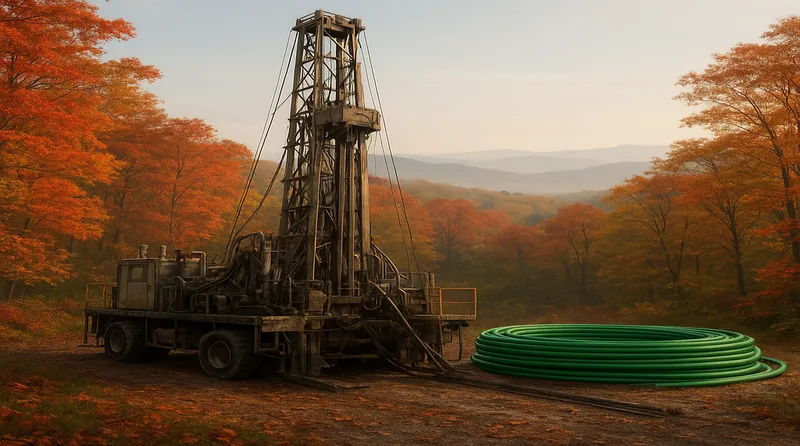
North Carolina is the second-largest solar state in the country — behind only California. The clean energy infrastructure, contractor networks, and homeowner awareness that come with that are real assets for geothermal's expansion. But geothermal and solar tell different regional stories in NC, and understanding which parts of the state make sense for ground-source heating is where this guide earns its keep.
The short version: North Carolina's 11.65¢/kWh electricity rate (EIA 2024) is below the national average, which keeps geothermal operating costs low but narrows the dollar gap against cheap gas. The state's former 35% renewable energy tax credit expired in 2016 and hasn't been replaced — so the federal 30% credit is your primary incentive. Duke Energy's HVAC rebates exist but appear targeted at air-source heat pumps, not ground-source. That makes the incentive stack thinner than Tennessee's, but the underlying thermal economics are solid in the right markets.
As with every Appalachian-adjacent state, the key question isn't "does geothermal work in North Carolina?" — it's "which North Carolina are you in?"
North Carolina's Geothermal Landscape
North Carolina runs from 6,684-foot peaks in the Blue Ridge to sea-level barrier islands on the Outer Banks — a geographic span that creates three fundamentally different energy markets and three very different geothermal stories.
Ground temperatures track that geography. In western NC's mountain counties, expect 56–59°F at borehole depth. In the Piedmont heartland — Charlotte, Greensboro, Raleigh — ground temps sit at 58–61°F. In the warmer Coastal Plain and coastal counties, ground temperatures reach 61–64°F. All of these support efficient geothermal operation, with COPs of 3.5–4.5 depending on formation temperature and system sizing.
The state's climate spans ASHRAE Zones 3 (coastal and southern coastal plain) through 5 (highest mountain elevations), with most of the population in Zone 4 (mixed humid). That means meaningful heating loads in winter and real cooling demands in summer — a dual-season case for geothermal throughout most of the state.
Duke Energy serves the vast majority of North Carolina's electric customers through two subsidiaries: Duke Energy Carolinas (western NC, Charlotte metro, Piedmont foothills) and Duke Energy Progress (central and eastern NC, the Research Triangle, Coastal Plain, and most of the coast). Rural areas are served by electric co-ops under the NC Electric Cooperatives association. Understanding which utility serves your property matters for rebate eligibility.
Three Distinct NC Markets
1. Western NC: The Blue Ridge Mountains
Asheville, Buncombe, Henderson, Madison, Haywood, Yancey, Mitchell, and surrounding mountain counties form North Carolina's most compelling residential geothermal market. Natural gas pipeline coverage is limited in many rural mountain communities — propane is the dominant heating fuel for homes outside the Asheville and Hendersonville urban cores. Heating loads are significant: Asheville logs around 4,300 heating degree days annually, and valley-and-ridge communities at higher elevations can exceed 5,000. The ROI math for propane-to-geo conversions is strong here, and Asheville's progressive environmental culture adds market receptivity that translates into real consumer demand.
2. The Piedmont & Research Triangle
The Piedmont plateau — running from Charlotte through Greensboro to the Research Triangle of Raleigh, Durham, and Chapel Hill — is North Carolina's population center and its most mixed heating-fuel market. Natural gas serves most urban and established suburban properties; older and rural Piedmont homes often run electric resistance or aging conventional heat pumps. Duke Energy Carolinas (Charlotte) and Duke Energy Progress (Triangle area) both offer HVAC rebates, though ground-source eligibility requires verification. The Triangle's tech and research workforce brings high environmental awareness and income levels that support geothermal investment, particularly in new construction and luxury retrofits.
3. Coastal Plain & The Outer Banks
Eastern NC's flat Coastal Plain — from Fayetteville to Wilmington to the Virginia border — is geologically the easiest part of the state for geothermal installation but economically the most nuanced. Cooling loads dominate in Zone 3 territory, and the geothermal case leads with summer efficiency rather than heating savings. The Outer Banks and coastal communities add a property-type wrinkle: vacation rental homes with high cooling demand but open-loop restrictions due to saltwater intrusion in coastal aquifers. The rule for coastal NC is simple: closed loop only within saltwater influence zones.
Incentives: What's Available, What's Not
Federal 30% Tax Credit (Section 25D) — Confirmed
The IRA's residential clean energy credit covers 30% of ground-source heat pump installation costs through 2032, with no cap. On a $20,000 system, that's $6,000 directly off your federal tax liability. This applies to every North Carolina homeowner regardless of utility or region. For full details on eligibility, carryforward rules, and how to claim it, see our federal tax credit guide.
No State Geothermal Credit — Honest Assessment
North Carolina had one of the most generous state renewable energy tax credits in the Southeast — 35% of installation costs — but it expired on January 1, 2016. No replacement program has been enacted. As of 2026, there is no North Carolina state income tax credit or rebate for residential geothermal heat pumps. This is a meaningful gap compared to Tennessee, which has TVA's $1,500 utility rebate, or Delaware, which has a DNREC state grant. DSIRE confirms no active statewide program.
Duke Energy HVAC Rebates — Verify Ground-Source Eligibility
Duke Energy (both Carolinas and Progress) offers HVAC replacement rebates up to $1,000 for qualifying heat pump installations. However, these programs specify efficiency requirements in SEER and HSPF ratings — the air-source heat pump rating system. Ground-source heat pumps are rated in EER and COP, not SEER/HSPF. Whether Duke's current HVAC rebate program extends to ground-source systems requires direct verification before you sign a contract. [NEEDS VERIFICATION — call Duke Energy or check duke-energy.com for current GSHP-specific eligibility. The SEER/HSPF language in the rebate terms suggests air-source focus, but program terms may have expanded.]
Even if Duke's rebate doesn't cover ground-source, the 30% federal credit alone is substantial. A $20,000 gross installation in NC nets to $14,000 after the federal credit. That's the baseline math to work from.
USDA REAP — Rural & Agricultural Properties
North Carolina's significant agricultural and rural land base makes USDA REAP relevant for farm properties, rural businesses, and agricultural operations. REAP can cover up to 50% of installation costs for qualifying rural commercial geothermal systems — a major incentive for farms, barns, processing facilities, and agritourism properties in western and eastern NC.
Electric Co-Op Programs
NC's rural electric cooperatives sometimes run their own efficiency programs. If you're served by a co-op rather than Duke Energy, contact them directly about heat pump incentives. Some co-ops participate in national programs through the National Rural Electric Cooperative Association (NRECA).
Costs & ROI: Three Honest Scenarios
North Carolina installation costs align with national averages: $17,000–$26,000 gross for a 3-ton vertical loop system. Western NC's hard Blue Ridge granite raises drilling costs at the high end; eastern NC's soft Coastal Plain sediments bring horizontal loop costs down. After the 30% federal credit, expect net costs of roughly $12,000–$18,000 depending on system size and geology.
Scenario 1: Western NC Propane Home (Mountain Counties)
| Factor | Detail |
|---|---|
| Annual propane cost | ~800 gal × $3.00–$3.50/gal = $2,400–$2,800/yr |
| Geothermal operating cost | ~$500–$650/yr at 11.65¢/kWh |
| Annual savings | ~$1,750–$2,300/yr |
| Net install (30% ITC) | ~$12,000–$17,500 |
| Simple payback | 6–10 years |
This is the clear go-ahead scenario. Western NC propane homes — in Buncombe, Henderson, Madison, Haywood, and surrounding mountain counties — are replacing expensive, volatile-priced fuel with North Carolina's moderately priced electricity. The federal credit brings the net cost down to a point where 7–8 year payback is achievable for average propane users, with high-usage mountain homes potentially shorter. See the full comparison in our geothermal vs. propane guide.
Scenario 2: Piedmont Electric Resistance Home
| Factor | Detail |
|---|---|
| Annual electric cost (heating + cooling) | ~$1,600–$2,200/yr |
| Geothermal operating cost | ~$450–$700/yr |
| Annual savings | ~$900–$1,700/yr |
| Net install (30% ITC) | ~$12,000–$16,000 |
| Simple payback | 10–14 years |
Reasonable, particularly when triggered by system replacement. Older Piedmont homes with electric resistance baseboard — common in late 1960s–80s construction throughout the Triangle and Piedmont Triad — are prime candidates. The savings math improves when you account for the full HVAC replacement cost a homeowner would pay anyway for a conventional system. If a new central air-source heat pump would cost $8,000–$12,000, the incremental premium for going geothermal narrows to the difference, not the total geothermal cost.
Scenario 3: Piedmont / Triangle Natural Gas
| Factor | Detail |
|---|---|
| Annual gas heating cost | ~600–900 therms × $1.00–$1.20/therm = $600–$1,080/yr |
| Geothermal operating cost | ~$450–$650/yr |
| Annual savings | ~$150–$450/yr |
| Net install (30% ITC) | ~$12,000–$16,000 |
| Simple payback | 20–30 years |
The honest no for most existing gas homes. Natural gas in the Charlotte and Triangle markets is relatively inexpensive, and the spread between gas heating costs and geothermal operating costs is too thin to produce a compelling payback. The exceptions are new construction (eliminate gas service infrastructure), homes at end-of-life system replacement, and buyers motivated by long-term energy independence or environmental goals. For those cases, the 30-year ownership economics favor geothermal even if the payback period is long — you're locking in low operating costs against an appreciating electricity and gas market. See the full analysis in our geothermal vs. natural gas guide.
Geology by Region: What It Means for Your Loop
North Carolina's geology is one of the most varied of any eastern state, and it matters directly for installation cost and loop system type.
Blue Ridge / Mountain Province (Western NC)
Hard crystalline rock — granite, gneiss, quartzite — dominates the western mountain counties. Drilling is expensive and slow in these formations; borehole contractors use rotary drilling rigs with carbide or diamond tooling. Flat land for horizontal trenches is scarce in mountain terrain. Vertical boreholes are the standard installation method in western NC. The upside: crystalline rock has good thermal conductivity, supporting efficient heat transfer and shorter total borehole length requirements per ton of system capacity.
Piedmont (Central NC)
The Piedmont belt of crystalline metamorphic rock (schist, phyllite, gneiss) with weathered regolith at the surface covers most of central NC. Drilling through weathered rock and into fresh rock is moderate-cost — easier than the highest Blue Ridge terrain, harder than the Coastal Plain. Vertical loops are standard in most Piedmont residential applications, though larger lots may permit horizontal installations in areas with deep weathered rock profiles. Crystalline Piedmont rock performs well thermally.
Sandhills Transition Zone
The Sandhills (Moore, Richmond, and surrounding counties) form a sandy transition between Piedmont and Coastal Plain. Looser, sandier soils make drilling easier and reduce cost, but sandy formation thermal conductivity is lower than clay-rich soils. Loop designers may specify slightly longer borehole depths to compensate. Horizontal loops become more practical in the Sandhills, where flat terrain and accessible soil make trenching feasible.
Coastal Plain (Eastern NC)
Eastern NC's Gulf Coastal Plain sediments — clay, marl, sand, alluvial deposits — are the easiest and cheapest geothermal drilling terrain in the state. Drilling is fast and inexpensive; horizontal loop trenches are practical on flat eastern NC properties. The abundant shallow groundwater in the Coastal Plain aquifer system makes open-loop systems viable for inland eastern NC properties. However, this groundwater benefit disappears near the coast.
Coastal Strip & Outer Banks: Closed Loop Only ⚠️
Within the saltwater influence zone — the Outer Banks barrier islands, coastal Brunswick, New Hanover, Pender, Carteret, Onslow, and adjacent counties — open-loop geothermal is not appropriate. Shallow aquifers in coastal NC contain brackish or saline water. Running that water through a heat pump heat exchanger causes rapid corrosion and equipment failure. Installing an open-loop system that injects saltwater back into the aquifer also creates regulatory issues with the NC Division of Water Resources.
Closed-loop systems (vertical or horizontal, depending on lot size) are the right answer for coastal properties. The good news: the soft sediments of the coastal barrier and sound-side environments are easy to drill, so installation costs are relatively low despite being limited to closed loop.
Western NC: Asheville and Mountain Country
Buncombe County and greater Asheville have become one of the Southeast's most active alternative energy communities. The area attracts residents who prioritize sustainability, and Asheville's architecture firms and high-end custom homebuilders are increasingly incorporating geothermal systems into new and renovated mountain homes.
The rural mountain counties surrounding Asheville — Madison, Yancey, Mitchell, Haywood, Macon, Clay, Cherokee — present the strongest raw financial case. These communities depend heavily on propane because natural gas mains simply don't reach remote hollows and ridge-top properties. A Madison County homeowner burning 900 gallons of propane per year at $3.25/gallon — $2,925 annually — is an ideal geothermal candidate.
The Appalachian highlands of western NC also connect to a regional tourism economy. Vacation rentals, mountain cabins, and agritourism properties from Black Mountain to Bryson City share the same propane dependence and high heating loads as primary residences, but they can generate rental income that changes the investment calculus. A cabin generating $40,000/year in rental revenue that saves $2,000/year in propane costs pays back on a very different timeline than a primary residence — the operating cost reduction feeds directly into margin.
Western NC shares Appalachian geology and market characteristics with neighboring Tennessee's East TN market, northern Georgia's Blue Ridge market, southwestern Virginia, and the South Carolina Upstate. Contractors working across state lines in this region are worth considering — experienced Appalachian geothermal drilling crews may be licensed in multiple states.
Piedmont & Research Triangle: Tech-Forward Market
The Research Triangle — Raleigh, Durham, Chapel Hill, and their surrounding suburbs (Cary, Apex, Morrisville, Wake Forest, Carrboro) — is one of the most educated and environmentally aware metro areas in the Southeast. Duke University, UNC, NC State, and the dense concentration of biotech, pharma, and tech firms create a homeowner demographic that responds to long-term ROI arguments and environmental benefits.
The Triangle's new construction market is booming. Wake County has been one of the fastest-growing counties in the US for years, and Chatham County (Chapel Hill's western neighbor) is now absorbing substantial suburban growth. New construction is where geothermal makes the most sense in gas-served Triangle suburbs — the install premium is smallest when geothermal is integrated from the ground up, and builders serving the upper end of the market increasingly view geothermal as a competitive feature.
Charlotte's Piedmont Triad and Lake Norman area present similar dynamics — a large, growing metro with high income levels and substantial high-end new construction activity in Iredell, Lincoln, and Union counties surrounding the city. Duke Energy Carolinas serves most of greater Charlotte, and that utility relationship is the right place to start for current GSHP rebate eligibility.
For contractors, the Piedmont market represents North Carolina's best medium-term growth opportunity. The geography is manageable (Piedmont drilling is moderate-cost), the customer base has financial capacity, and market saturation from competing geothermal installers is still low compared to New England states where ground-source has a longer history. Read our guide on adding geothermal to your HVAC business for the contractor-side economics.
Coastal Plain & The Outer Banks
Eastern NC's flat terrain and soft soils make geothermal installation mechanically easy — but the market case is more complex than western NC's simple propane-replacement story.
Most of coastal and eastern NC is in ASHRAE Zone 3 (warm, humid) — similar to Memphis. The heating season is shorter and milder than the mountains; cooling loads dominate from April through October. Geothermal's value proposition here shifts toward summer cooling efficiency. A ground loop at 62°F is a dramatically more efficient heat rejection target in August than 95°F outdoor air, and that efficiency shows up in lower summer utility bills.
The Wilmington and Cape Fear area has a solid professional residential market — a growing retirement and second-home community with real estate values that support geothermal investment. New Hanover County's combination of high home values, significant cooling loads, and accessible Coastal Plain geology is a reasonable market for geothermal.
The Outer Banks is a different story — and an interesting one. Dare County, Currituck Banks, and the southern barrier islands host tens of thousands of vacation rental properties, many with high peak cooling loads from summer occupancy. A 5-bedroom Hatteras vacation home running central AC through peak rental season pays meaningful cooling costs. Geothermal's efficiency advantage in summer cooling is particularly pronounced in hot coastal conditions. The constraint, as noted, is closed-loop only — but the drilling cost in barrier island sediments can be quite low for horizontal installations in larger lots.
Permits & Regulations
North Carolina's permitting process for geothermal is governed primarily by state water law and local building codes — comparable to other mid-Atlantic and Southeast states in complexity.
Licensed well driller required: The NC Well Construction Act (NCGS 87-83 through 87-97) governs borehole drilling statewide. Geothermal loop boreholes are classified as wells and must be installed by a licensed water well contractor. Verify your installer's NC license before signing. The NC Division of Water Resources maintains the licensing database.
Open-loop permits: If you're pursuing an open-loop system (inland eastern NC, where groundwater is abundant), you'll need a well construction permit from the NC Division of Water Resources and a groundwater use authorization. Your installer handles this, but it adds lead time to the project. Open-loop is not appropriate in saltwater-influenced coastal zones — see Geology section above.
Local building permits: Standard mechanical and electrical permits through your county or city building department. NC's building department processes are generally efficient; budget 2–4 weeks in typical suburban jurisdictions.
Coastal zone considerations: Unlike Maryland's Chesapeake Bay Critical Area or New Jersey's CAFRA zone, North Carolina doesn't have a single comprehensive coastal overlay for geothermal. However, NC CAMA (Coastal Area Management Act) may apply to properties in Areas of Environmental Concern near the coast. Check with your local Coastal Area Management office if your property is near water. For open-loop systems near wetlands or coastal waters, additional NC DEQ review may be required.
Finding a North Carolina Geothermal Installer
North Carolina's installer market is developing — better than most Southeast states, thinner than established geothermal markets in the Northeast.
IGSHPA directory: Start with the IGSHPA certified contractor database. NC has IGSHPA-certified contractors primarily concentrated in the Raleigh/Triangle and Charlotte areas, with some coverage in the Asheville market.
By region:
- Asheville / Western NC: The Asheville green building community has some geothermal contractors, though the market is smaller than Raleigh or Charlotte. Ask specifically about Blue Ridge hard-rock drilling experience. Contractors who work across TN and NC state lines may have broader experience with Appalachian formations.
- Research Triangle (Raleigh/Durham/Chapel Hill): Best installer density in the state. Get multiple quotes; the market is competitive enough for real price comparison. Ask about experience with Piedmont crystalline geology.
- Charlotte (Piedmont Triad): Growing market with several Duke Energy-approved contractors. Check Duke Energy's rebate program contractor list for vetted installers.
- Eastern NC / Coastal: Thinner market; installers may travel from the Triangle or Virginia. Horizontal loop expertise is particularly relevant for Coastal Plain installations.
Key questions to ask any NC installer:
- Do you hold a NC water well contractor license?
- What drilling method do you use for this county's formations?
- Are you enrolled in Duke Energy's approved contractor program? (If Duke territory)
- For coastal properties: Are you familiar with saltwater intrusion zone requirements and CAMA considerations?
- What open-loop permitting experience do you have with NC Division of Water Resources? (Eastern NC open-loop only)
Bottom Line: Who Should Go Geothermal in North Carolina?
North Carolina's geothermal story is strongest in the mountains and weaker in the gas-heated urban core — the same pattern that runs through Kentucky, Tennessee, and West Virginia. The state lost its powerful 35% renewable energy tax credit a decade ago and hasn't replaced it, which means the incentive stack is thinner than Tennessee's (TVA rebate) or Delaware's (DNREC grant). But the federal 30% credit is still substantial, and the thermal economics in the right markets are solid.
Strong case — go geothermal:
- Western NC mountain counties on propane (Buncombe, Henderson, Madison, Haywood, Macon, and surrounding counties)
- Mountain vacation rental and agritourism properties with propane heating and high seasonal occupancy
- Rural NC homes on electric resistance heat (Piedmont and eastern NC)
- New construction anywhere in NC — integration cost advantage is significant
- Rural properties and farms eligible for USDA REAP (up to 50% grant)
- Outer Banks / coastal vacation properties with high summer cooling loads (closed loop only)
Reasonable case — evaluate carefully:
- Triangle and Charlotte suburban homes with aging conventional heat pumps at end of life
- Eastern NC homes where cooling savings are meaningful and system replacement is due
- Buyers prioritizing long-term energy independence or carbon footprint
Weak financial case — be honest:
- Existing Charlotte, Raleigh, and other Piedmont homes on natural gas
- Any NC home where gas is the primary heating fuel and the system is working fine
North Carolina's geothermal opportunity is real, if unevenly distributed. The mountain propane market is the strongest residential story in the state, comparable to East Tennessee, northern Georgia's Blue Ridge corridor, Appalachian Virginia, and the South Carolina Upstate. The Triangle and Charlotte markets are emerging, new-construction driven. And the coast — with its closed-loop requirement and cooling-season emphasis — is a niche but real opportunity for high-value vacation rental properties.
Compare NC's ROI across fuel types with our 25-state payback period hub, or explore financing options that make the upfront cost more manageable.
Sources
- EIA — North Carolina Electricity Profile (11.65¢/kWh, 2024)
- Duke Energy — HVAC Replacement Rebates (up to $1,000)
- DSIRE — North Carolina Incentive Programs Database
- IRS — Section 25D Residential Clean Energy Credit
- IGSHPA — Find a Certified Geothermal Contractor
- NC DEQ — Division of Water Resources (Well Construction)
- USDA REAP — Rural Energy for America Program