
In This Guide
- Ohio and Geothermal: An Honest Assessment
- Quick Verdict: Should You Go Geothermal?
- Three Ohio Markets: Where It Works
- The Deregulated Electricity Advantage
- Climate & Geology by Region
- Geology & Drilling Conditions by Region
- Regional Costs & ROI
- Case Study: Athens County Propane Farmhouse
- Case Study: Dublin New Construction
- Case Study: Wayne County Dairy Farm + REAP
- Month-by-Month Energy Profile
- Open-Loop System Assessment by Region
- Loop Type Cost Comparison
- Incentives: ECO-Link & REAP (Federal §25D Expired)
- Solar + Geothermal Stacking
- The Honest Gas Assessment
- Permits & Licensing Requirements
- Finding & Vetting a Qualified Installer
- Maintenance & System Longevity
- Vacation Rental & Tourism Property Economics
- Tax Filing: What Applies Now
- Ohio vs. Neighboring States
- Frequently Asked Questions
- Bottom Line
- Sources
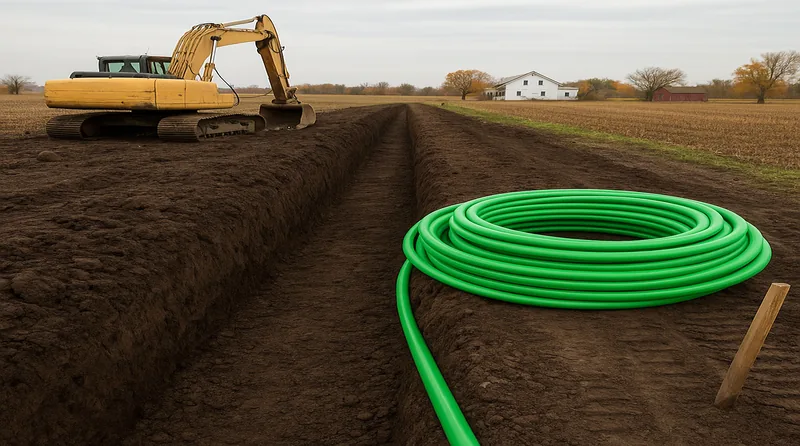
Ohio and Geothermal: An Honest Assessment
Let's get this out of the way upfront: Ohio is one of the hardest states in the country to make a financial case for geothermal heat pumps — if you're heating with natural gas.
About 65% of Ohio homes run on gas furnaces. Electricity costs 11.29¢/kWh (EIA 2024, rank 28), which is below the national average. Gas is cheap, plentiful, and deeply embedded in the state's energy infrastructure — Ohio sits on the Utica and Marcellus shale formations. When you run the numbers on replacing a working gas furnace with a $20,000+ geothermal system, you get payback periods of 33–93 years. That's not a typo — and it got longer this year, because the 30% federal §25D credit applied only to systems placed in service through December 31, 2025 and is not available after that date (One Big Beautiful Bill Act, P.L. 119-21). Every payback figure on this page has been recomputed without it.
So why write an Ohio geothermal guide? Because Ohio isn't one market — it's at least three. And two of those markets have genuinely compelling stories:
- Southeast Ohio's Appalachian foothills are full of homes running on propane at $2.50–$3.50/gallon. Those homeowners face heating bills of $2,000–$4,200/year, and geothermal payback periods of 6–17 years at full 2026 cost. That's still the strongest case in the state.
- The Columbus metro is one of the fastest-growing regions in the U.S. New construction offers the single best economic case because you're comparing geothermal against installing both a traditional HVAC system and gas infrastructure. Eliminate the gas line, the meter, and the furnace from your build budget, and geothermal's premium shrinks dramatically.
- Northeast Ohio's fuel oil pockets — older homes in the Cleveland/Akron/Youngstown corridor that never converted to gas — see paybacks of 6–17 years at full 2026 cost.
Quick Verdict: Should You Go Geothermal in Ohio?
| Your Situation | Verdict | Estimated Payback |
|---|---|---|
| SE Ohio propane home (Appalachian) | 🟢 Strong yes | 6–17 years |
| NE Ohio fuel oil home | 🟢 Strong yes | 6–17 years |
| Electric resistance heating | 🟢 Yes | 10–17 years |
| New construction (Columbus metro) | 🟢 Best opportunity | 11–19 years (incremental) |
| Farm/ranch (USDA REAP eligible) | 🟢 Excellent | 4–7 years |
| Aging furnace + AC replacement | 🟡 Evaluate at replacement | 10–16 years |
| Natural gas (any Ohio metro) | 🔴 Not recommended financially | 33–93 years |
Three Ohio Markets: Where It Works
Market 1: Southeast & Rural Ohio (Appalachian Foothills)
This is geothermal's strongest market in Ohio — by far. In the Appalachian counties (Athens, Hocking, Vinton, Meigs, Washington, Morgan, Perry), natural gas service is spotty or nonexistent. Homeowners rely on propane at $2.50–$3.50/gallon (800–1,200 gallons annually = $2,000–$4,200/year), electric resistance at $1,800–$3,200/year, or supplemental wood and coal.
Rural lot sizes of 1+ acres open up horizontal loop installation — $2,000–$5,000 cheaper than vertical drilling. At full 2026 cost with no federal credit, propane-to-geothermal conversions deliver 6–17 year paybacks with decades of reduced operating costs ahead.
Market 2: Central Ohio (Columbus Metro)
Columbus is booming. Intel's $20+ billion semiconductor facility in Licking County, Honda's EV battery plant, and an influx of tech workers are driving construction across Franklin, Delaware, and Licking counties. New construction changes the geothermal equation fundamentally — no rip-and-replace cost, no gas line needed, ductwork designed for geothermal from day one. The incremental cost runs roughly $10,000–$12,000 after eliminating gas infrastructure. (It was $7,000–$10,000 while the 30% federal credit applied to the full system cost rather than just the premium — new construction lost the most in that repeal.)
Market 3: Northeast Ohio (Cleveland/Akron/Youngstown)
NE Ohio has significant pockets of homes still heating with fuel oil — pre-1970s housing stock in inner-ring suburbs and rural areas. At $3.50–$4.50/gallon and 800–1,200 gallons per winter, annual heating costs of $3,000–$5,000 are common. Geothermal payback: 6–17 years at full 2026 cost. For the majority on gas, the numbers are far worse (33–93 years) — geothermal does not pencil out against cheap Ohio gas.
The Deregulated Electricity Advantage
Ohio has a deregulated electricity market — you can shop for your generation rate while your local utility (AEP Ohio, Duke Energy Ohio, or FirstEnergy) handles transmission and distribution. This matters for geothermal:
- Potential upside: Lock in lower generation rates through competitive suppliers, reducing operating costs below the 11.29¢ state average. Some Ohio customers have secured rates below 8¢/kWh through aggregation programs.
- Potential risk: Rates can spike with volatile retail electric service providers. A geothermal system's economics depend on stable, predictable costs over 20+ years.
- Strategy: If you install geothermal, shopping your electric rate isn't optional — it's part of the financial plan. Municipal aggregation programs and long-term fixed-rate contracts are your best tools.
Climate & Geology by Region
Northwest Ohio (Toledo, Findlay, Lima)
Glacial limestone plains. Flat agricultural land with glacial deposits over limestone and dolomite bedrock. This is some of the most favorable drilling geology in the state — straightforward through glacial overburden, easy when limestone is reached. Ground temps: 52–54°F. HDD: 5,800–6,200.
Northeast Ohio (Cleveland, Akron, Youngstown)
Devonian and Mississippian shale. Ohio's coldest region — lake-effect snow drives HDD to ~6,000+. Shale is harder and more abrasive to drill than limestone, adding $1,000–$3,000 to vertical installations. Ground temps: 51–53°F.
Central Ohio (Columbus, Dayton, Springfield)
Glacial till over limestone. Thick glacial deposits (30–100+ ft) over limestone bedrock. Standard drilling — no surprises, competitive pricing. Ground temps: 53–55°F. HDD: 5,200–5,500.
Southeast Ohio (Athens, Hocking, Vinton)
Appalachian Plateau sandstone and shale. Mixed formations with moderate thermal conductivity. Topography can complicate horizontal installation on hillside properties. Valley bottoms are most favorable. Ground temps: 53–55°F. HDD: 5,200–5,800.
| City | Ground Temp (50 ft) | Heating Degree Days | Cooling Degree Days |
|---|---|---|---|
| Cleveland | 52°F | 6,100 | 750 |
| Akron | 52°F | 6,000 | 700 |
| Columbus | 54°F | 5,300 | 1,000 |
| Dayton | 53°F | 5,500 | 950 |
| Cincinnati | 55°F | 4,800 | 1,200 |
| Toledo | 52°F | 6,200 | 750 |
| Athens | 54°F | 5,600 | 800 |
Geology & Drilling Conditions by Region
Ohio's geology varies dramatically from the glaciated limestone plains of the west to the Appalachian Plateau of the southeast. Drilling conditions and costs differ significantly across these zones:
| Region | Dominant Geology | Thermal Conductivity (BTU/hr·ft·°F) | Typical Bore/Trench Depth | Drilling Cost/ft | Key Challenges |
|---|---|---|---|---|---|
| NW Ohio (Toledo/Findlay/Lima) | Glacial till (clay/silt/gravel) over Silurian-Devonian limestone/dolomite | 1.0–1.3 (glacial) / 1.3–1.6 (limestone) | Vertical: 150–200 ft; Horizontal: 6–8 ft | Vertical: $12–$16/ft; Horizontal: $2.50–$4/ft | Best drilling in Ohio. Glacial overburden easy to penetrate. Limestone drills clean. Flat terrain = easy horizontal. Agricultural land = lots available for loops. |
| NE Ohio / Lake Erie (Cleveland/Akron/Canton) | Glacial till (variable thickness) over Devonian/Mississippian shale | 0.8–1.1 (shale — lowest in state) | Vertical: 175–250 ft (longer due to lower conductivity); Horizontal: 6–8 ft (where lots allow) | Vertical: $14–$20/ft; Horizontal: $3–$5/ft | Hardest and most expensive drilling in Ohio. Shale is abrasive — accelerates bit wear. $1K–$3K premium over western OH. Lake-effect cold increases heating demand. Smaller suburban lots often force vertical. Experienced NE Ohio drillers essential. |
| Central Ohio / Columbus (Franklin/Delaware/Licking) | Deep glacial till (30–100+ ft) over Devonian limestone | 0.9–1.2 (glacial) / 1.2–1.5 (limestone) | Vertical: 150–225 ft; Horizontal: 6–7 ft | Vertical: $12–$16/ft; Horizontal: $2.50–$4/ft | Standard geothermal drilling — "no surprises" zone. Deep glacial till is easy through. Limestone below provides good thermal performance. New construction: drilling during build phase saves money. |
| SW Ohio / Cincinnati (Hamilton/Butler/Warren) | Glacial till and outwash (gravel/sand) over Ordovician limestone/shale | 1.0–1.4 (outwash) / 1.2–1.5 (limestone) | Vertical: 150–200 ft; Horizontal: 6–7 ft | Vertical: $12–$16/ft; Horizontal: $2.50–$4/ft | Good drilling conditions. Glacial outwash (sand/gravel) provides excellent thermal conductivity. Near Indiana border: similar conditions. Cincinnati metro has decent installer availability. |
| Appalachian Plateau / SE Ohio (Athens/Hocking/Vinton) | Pennsylvanian-Permian sandstone, shale, and coal measures | 0.8–1.1 (sandstone/shale) | Vertical: 175–250 ft; Horizontal: 6–8 ft (valley floors) | Vertical: $13–$18/ft; Horizontal: $3–$5/ft | Mixed formations with moderate conductivity. Topography varies — hillside properties may have limited horizontal options; valley floors are ideal. Coal-measure geology includes some softer zones. Longer bores needed for lower conductivity. |
| Eastern Ohio / Ohio River Valley (Steubenville/Marietta) | Permian sandstone and shale (similar to SE but steeper terrain) | 0.8–1.1 | Vertical: 175–250 ft; Horizontal: limited by terrain | Vertical: $13–$18/ft; Horizontal: $3–$5/ft | Steep river valley terrain limits horizontal options. Vertical likely required for most properties. Some areas have mine voids — soil assessment critical. WV-based installers may also serve this corridor. |
| Rural Agricultural (W/NW Ohio plains) | Deep glacial till/lacustrine clay over dolomite | 1.0–1.4 | Vertical: 150–200 ft; Horizontal: 6–8 ft | Vertical: $11–$15/ft; Horizontal: $2–$3.50/ft | Best horizontal loop territory in Ohio. Flat terrain, deep soil, huge lots. Farm properties with acreage get the cheapest installations in the state. Pond loops on farm ponds viable. |
Pre-Drill Intelligence: Ohio DNR Well Logs
The Ohio Department of Natural Resources (ODNR) Division of Geological Survey maintains a database of water well logs and geological surveys across the state at ohiodnr.gov. These records reveal formation types, water-bearing zones, and drilling conditions near your property. Your installer should review these before finalizing loop design — any experienced Ohio driller does this routinely.
For NE Ohio specifically, the shale formation depth and thickness matter for cost estimating. A property where the drill encounters shale at 50 ft costs more than one where it hits at 120 ft. Well log data helps your installer anticipate the transition and bid accurately.
Regional Costs & ROI
| Region | Avg. System Cost (3–4 ton) | Best Loop Type | Typical Annual Savings | 2026 Payback (full cost, no federal credit) | Payback published under the 30% ITC (2022–2025 installs) |
|---|---|---|---|---|---|
| SE Ohio / Appalachian (propane) | $18,000–$24,000 | Horizontal (rural lots) | $1,400–$3,100 (vs. propane) | 6–17 yr | 4–12 yr |
| NE Ohio (fuel oil) | $20,000–$28,000 | Vertical (suburban lots + shale) | $1,600–$3,600 (vs. fuel oil) | 6–17 yr | 4–11 yr |
| NE Ohio (gas) | $20,000–$28,000 | Vertical | $300–$600 (vs. gas) | 33–93 yr | 23–65 yr |
| Columbus metro (new construction) | $22,000–$30,000 | Vertical | $800–$1,200 (vs. gas+AC) | 11–19 yr incremental | 4–7 yr incremental |
| Cincinnati metro (gas) | $18,000–$26,000 | Vertical or horizontal | $400–$700 (vs. gas) | 26–65 yr | 18–46 yr |
| NW Ohio / rural agricultural | $16,000–$22,000 | Horizontal (farm land) | $1,200–$2,800 (vs. propane) | 6–18 yr | 4–13 yr |
The left-hand payback column is the one that applies in 2026. The 30% federal §25D credit applied only to property placed in service through December 31, 2025 and is not available after that date (One Big Beautiful Bill Act, P.L. 119-21), so the "before incentives" figures are now simply the figures. The right-hand column is retained for reference only. A USDA REAP grant, where you qualify, still comes off the cost and shortens the payback.
About the examples below
The homes in these examples are representative scenarios, not real customers. We do not install geothermal systems and we have not visited these properties. Each scenario models a typical home for the area using real equipment pricing, local fuel and electricity rates, and the incentive programs described above — but the house, the owner and the invoice are constructed to show how the arithmetic works. Treat them as worked examples, and get quotes for your own home before budgeting.
Case Study: Athens County Propane Farmhouse
The Setup
A 2,000 sq ft farmhouse in Athens County, built 1985. Heating with a propane furnace consuming ~1,000 gallons/year at $2.75/gallon. Window AC units for cooling. Property: 3 acres on a valley floor — ideal horizontal loop terrain.
Old System Costs
- Annual propane: 1,000 gallons × $2.75 = $2,750/year
- Annual cooling (window units): $500/year
- Total HVAC: $3,250/year
The Geothermal System
- Equipment: 4-ton closed-loop system with desuperheater
- Loop: Horizontal — 4 trenches × 200 ft at 5 ft depth (3-acre lot, valley floor soil)
- Installed cost: $20,000
- Federal ITC (§25D): $0 — expired for installs placed in service after Dec 31, 2025
- 2026 out-of-pocket: $20,000
The Math
- Annual geothermal electricity: ~$900/year (11.29¢/kWh, COP 3.5 heating / EER 18 cooling)
- Annual savings: $3,250 − $900 = $2,350/year
- Simple payback: $20,000 ÷ $2,350 = 8.5 years
- At $3.20/gallon propane: payback drops to 7.5 years
- 20-year net savings: ($2,350 × 20) − $20,000 = $27,000
This same job netted $14,000 and a 6.0-year payback under the 30% federal credit, which applied to property placed in service through December 31, 2025. The repeal added about two and a half years.
Verdict: Still one of the best geothermal cases in Ohio. Horizontal loops on a large rural lot saved ~$4,000 vs. vertical. The valley floor soil in Athens County provided good thermal conductivity. The family gained whole-house cooling for the first time — replacing inefficient window units. After the 8.5-year payback, $2,350/year in savings is effectively a raise that lasts as long as they own the home. Propane replacement carries this case on the size of the savings, not on a tax credit.
Case Study: Dublin New Construction
The Setup
A 3,200 sq ft new construction in a Dublin subdivision, built 2025. Buyers relocated from Portland for tech jobs. Builder offered geothermal as an upgrade. Glacial till over limestone — standard Columbus drilling.
Conventional HVAC Quote
- Conventional HVAC + gas infrastructure: $11,000
- Estimated annual gas + AC: $1,800/year
The Geothermal System
- Equipment: 5-ton two-stage geothermal, desuperheater, 3 vertical bores × 220 ft
- Installed cost: $26,000
- Incremental over conventional: $26,000 − $11,000 = $15,000
- Federal ITC (§25D): $0 — expired for installs placed in service after Dec 31, 2025
- 2026 incremental cost: $15,000
The Math
- Annual geothermal electricity: ~$1,000/year
- Annual savings vs. conventional: $1,800 − $1,000 = $800/year
- Incremental payback: $15,000 ÷ $800 = 18.8 years
- Eliminate gas line hookup ($3,000–$5,000): incremental drops to $10,000–$12,000 → payback 12.5–15.0 years
- Add desuperheater DHW savings ($200–$300/year): payback drops to about 10.9 years on the best case
Under the 30% federal credit — available only for property placed in service through December 31, 2025 — the credit applied to the full $26,000 rather than just the premium, which cut the net incremental to $7,200 and produced a 9.0-year payback (5.3–6.6 years with the gas-line and desuperheater adjustments). That leverage is gone.
Verdict: New construction lost more than any other Ohio scenario in the repeal, because the credit used to apply to the full $26,000 rather than just the premium — that leverage was what made this the state's best case. It is still the best structural case: no rip-and-replace, no lawn restoration (a real cost in retrofits), ductwork designed for geothermal, and the home is solar-ready. But the honest incremental payback is now 11–19 years depending on gas-line and desuperheater credit, not 5–7. From a resale perspective, no gas dependency is increasingly attractive in a market where energy-conscious buyers relocating from the West Coast represent a growing demographic.
Case Study: Wayne County Dairy Farm + REAP
The Setup
A 2,400 sq ft farmhouse on a 260-acre dairy operation outside Wooster in Wayne County — the heart of Ohio's agricultural belt. The family qualifies for USDA REAP (75%+ gross income from dairy operations). The farmhouse heats with propane at $2,900/year and cools with a 15-year-old 10 SEER unit at $720/year. The property has a 0.7-acre farm pond, 10 ft deep, 150 ft from the house. NW Ohio's glacial till provides excellent drilling conditions.
Old System Costs
- Annual propane: 950 gallons × $3.05/gallon = $2,898/year
- Annual cooling (10 SEER AC): $720/year
- Total HVAC: $3,618/year
The Geothermal System
- Equipment: 4-ton WaterFurnace 5 Series, two-stage + desuperheater
- Loop: Pond loop — 8 slinky coils in the farm pond, 150 ft header to house
- Installed cost: $19,500 (pond loop = cheapest option)
REAP Stack (2026)
| Line Item | Amount |
|---|---|
| Total geothermal system cost | $19,500 |
| USDA REAP grant (25%) | −$4,875 |
| Federal ITC (§25D) | $0 — expired for installs placed in service after Dec 31, 2025 |
| 2026 out-of-pocket | $14,625 (25% covered) |
| Annual savings (vs. propane + old AC) | $2,668 |
| Simple payback | 5.5 years |
Under the pre-2026 rules this same stack netted to $10,237 with a 3.8-year payback, because the 30% federal credit applied to the post-grant cost. REAP was not repealed — only the federal §25D component came out.
The Math
- Annual geothermal electricity: ~$950/year (11.29¢/kWh, COP 3.5/EER 20)
- Annual savings: $3,618 − $950 = $2,668/year
- At 40% REAP: out-of-pocket drops to $11,700 → payback 4.4 years
- At 50% REAP: out-of-pocket drops to $9,750 → payback 3.7 years
- 20-year net savings (25% REAP): ($2,668 × 20) − $14,625 = $38,735
Verdict: Triple optimization — the farm pond eliminated vertical drilling costs, REAP rewarded the dairy operation, and NW Ohio's glacial geology kept header trenching simple. The pond continues to function normally for livestock water. The family eliminated propane delivery to a rural property and gained dramatically improved cooling. Wayne County OSU Extension provided free technical assistance with the REAP application.
REAP application submitted through the USDA Ohio State Office in Columbus. Timeline: 5 months from submission to award. Key tip: apply before breaking ground — strong application with installation timeline demonstrates project readiness.
Month-by-Month Energy Profile
This profile models the Athens County propane farmhouse (2,000 sq ft, 4-ton system) after geothermal conversion.
| Month | Old Propane Cost | Old Electric (AC) | Geo Electric Cost | Monthly Savings |
|---|---|---|---|---|
| January | $520 | $0 | $140 | $380 |
| February | $460 | $0 | $125 | $335 |
| March | $330 | $0 | $90 | $240 |
| April | $120 | $0 | $40 | $80 |
| May | $0 | $30 | $25 | $5 |
| June | $0 | $80 | $55 | $25 |
| July | $0 | $120 | $80 | $40 |
| August | $0 | $110 | $75 | $35 |
| September | $0 | $60 | $40 | $20 |
| October | $100 | $0 | $35 | $65 |
| November | $310 | $0 | $80 | $230 |
| December | $480 | $0 | $130 | $350 |
| Annual Total | $2,320 | $400 | $915 | $1,805 |
Propane at $2.75/gallon. Electric at 11.29¢/kWh (EIA 2024). Ohio is heavily heating-dominant (~85% of geothermal energy use). The savings concentration in winter months (November–March) reflects propane replacement economics — that's where the payback lives.
Open-Loop System Assessment by Region
| Region | Open-Loop Viability | Water Temp | Key Considerations |
|---|---|---|---|
| NW Ohio (Toledo/Findlay) | 🟢 Generally viable | 52–54°F | Good aquifer yields in glacial outwash and limestone. Ohio EPA well permit required. Water quality generally good. |
| NE Ohio (Cleveland/Akron) | 🟡 Site-specific | 51–53°F | Variable yields in shale. Some areas have adequate fractured-rock aquifers. Water quality testing essential — NE Ohio has legacy industrial contamination in some areas. |
| Central Ohio (Columbus/Dayton) | 🟢 Generally viable | 53–55°F | Good aquifer production in glacial outwash. Ohio EPA well permit required. New construction: open-loop can reduce installation costs. |
| SW Ohio (Cincinnati) | 🟢 Generally viable | 54–55°F | Great Western aquifer yields in gravel/sand outwash. Some of the best open-loop conditions in Ohio. |
| SE Ohio (Appalachian) | 🟡 Limited | 53–55°F | Low well yields in sandstone/shale. Valley alluvium may support in some locations. Most properties better suited to horizontal closed-loop. |
| Ohio River Valley (east) | 🟡 Site-specific | 54–55°F | Alluvial aquifers along Ohio River may support. Mine drainage contamination in some areas — water quality testing essential. |
Ohio EPA oversight: All geothermal wells — open-loop and closed-loop — fall under the Ohio EPA's Division of Drinking and Ground Waters. Open-loop systems require a well construction permit, water quality testing, and discharge compliance. Your installer handles this, but build 3–5 weeks into your timeline for permitting.
Loop Type Cost Comparison
| Loop Type | Typical Cost (3-ton) | Best For | Ohio Notes |
|---|---|---|---|
| Vertical closed-loop | $18,000–$28,000 | Suburban lots, NE Ohio shale | Wide range: NW/central limestone ($18K–$22K) vs. NE shale ($22K–$28K). Default for smaller suburban lots. |
| Horizontal slinky | $12,000–$18,000 | Rural properties (½+ acre) | SE Ohio propane territory. Valley floors with deep soil are ideal. Saves $4K–$8K vs. vertical in the right conditions. |
| Horizontal straight | $14,000–$20,000 | Large agricultural properties | NW Ohio farmland. 400–600 ft trench per ton. Cheapest per-foot installation in Ohio. |
| Open-loop | $12,000–$18,000 | SW/NW Ohio with good aquifer | Great Western aquifer (Cincinnati) and glacial outwash (NW) are strong. Ohio EPA permit required. |
| Pond/lake loop | $10,000–$15,000 | Farm properties with ponds | Ohio has numerous farm ponds. Min ½ acre, 8 ft deep. Cheapest option where available. |
Incentives: ECO-Link & REAP (Federal §25D Expired)
Federal Residential Clean Energy Credit (IRC §25D) — Expired ❌
The federal residential clean energy credit under IRC §25D provided 30% back on total installed cost, no cap, carrying forward to future tax years. It applied to property placed in service through December 31, 2025 and is not available after that date (One Big Beautiful Bill Act, P.L. 119-21). The Inflation Reduction Act had scheduled 30% through 2032 with step-downs in 2033 and 2034; that schedule was repealed before it took effect. On a $22,000 Ohio system that was $6,600 back — an Ohio homeowner installing in 2026 gets nothing. Verified July 2026 against IRS.gov.
Ohio State Incentives — The Honest Picture
As of July 2026, Ohio has no confirmed state-level geothermal rebate or tax credit. We checked DSIRE, the Ohio EPA, and the Ohio Development Services Agency. With the federal §25D credit also gone, an Ohio homeowner who is not REAP-eligible and has no utility rebate is paying full sticker price. Chase the utility programs below — they matter more than they used to.
ECO-Link Program: Ohio previously offered ECO-Link through the Ohio EPA and State Treasury — below-market interest rate loans for energy efficiency. Status unclear as of March 2026. Contact the Ohio EPA Division of Environmental and Financial Assistance directly. (unverified)
Utility Programs
| Utility | Service Territory | Geothermal Incentive | Status |
|---|---|---|---|
| AEP Ohio | Central/Southern Ohio | Energy efficiency programs — no confirmed GSHP rebate | (unverified) — aepohio.com |
| Duke Energy Ohio | SW Ohio / Cincinnati | Heat pump rebates (some years) | (unverified) — duke-energy.com |
| FirstEnergy (Ohio Edison/CEI/Toledo Edison) | NE/NW Ohio | Efficiency programs | (unverified) — firstenergycorp.com |
USDA REAP — Critical for Rural Ohio
Ohio has approximately 77,000 farms covering 13.6 million acres. Major REAP-eligible operations: dairy (Wayne, Mercer counties), grain (NW Ohio), cattle (SE Ohio), poultry, and nursery operations. REAP grants cover up to 50%; loan guarantees up to 75%.
REAP Stack (Ohio Farm, 2026)
| Line Item | Amount |
|---|---|
| 3-ton horizontal system | $20,000 |
| USDA REAP grant (25%) | −$5,000 |
| Federal ITC (§25D) | $0 — expired for installs placed in service after Dec 31, 2025 |
| 2026 out-of-pocket | $15,000 |
| Annual savings (vs. propane) | $2,200 |
| Payback | 6.8 years |
Under the pre-2026 rules this stack netted to $10,500 with a 4.8-year payback, because the 30% federal credit applied to the post-grant cost. REAP was not repealed; it now carries the load on its own. Note also that REAP's loan guarantees are not a subsidy — a guaranteed loan is repaid, so it improves your financing terms but does not reduce what the system costs you.
Property Assessed Clean Energy (PACE)
PACE financing is available in some Ohio jurisdictions, allowing costs to be repaid through property tax assessments. Note: PACE liens are senior to your mortgage — some lenders have concerns. Verify with your mortgage holder before pursuing PACE.
Solar + Geothermal Stacking
Ohio's solar resource is modest — 3.8–4.5 peak sun hours/day. Net metering varies by utility but is generally available for residential systems.
| Component | Cost | 2026 Out-of-Pocket |
|---|---|---|
| 4-ton geothermal (vertical, Columbus) | $24,000 | $24,000 |
| 8 kW solar array | $24,000 | $24,000 |
| Total | $48,000 | $48,000 |
| Annual energy savings (vs. propane + grid) | ~$3,000/year | |
| Combined payback | ~16 years | |
Section 25D covered both the geothermal and the solar at 30% for property placed in service through December 31, 2025, netting this pair to $33,600 and a ~11.2-year payback. It is not available after that date.
Ohio-specific advantage: In the deregulated market, solar + geothermal reduces your exposure to competitive retail rate volatility. Solar generates electricity; geothermal multiplies it 3.5–4.5× through the heat pump's COP. Both used to qualify for separate 30% §25D credits; neither does for property placed in service after December 31, 2025, so the case for pairing them is now about rate insulation and self-supply rather than stacked credits.
The Honest Gas Assessment
About 65% of Ohio homes heat with natural gas. Ohio sits on the Utica and Marcellus shale formations. Gas is cheap, abundant, and deeply embedded in the state's infrastructure. Here's the honest math:
- Average Ohio gas heating cost: ~$800–$1,200/year
- Conventional AC cooling cost: ~$300–$500/year
- Total conventional HVAC: ~$1,100–$1,700/year
- Geothermal total (heating + cooling): ~$600–$1,000/year
- Annual savings: $300–$700
- 2026 out-of-pocket system cost: $18,000–$26,000 (the 30% federal credit that brought this to $12,600–$18,200 expired for property placed in service after Dec 31, 2025)
- Payback: 26–87 years (was 18–60+ under the credit)
We're not going to pretend those numbers work as a financial investment. They don't.
When Gas Homes SHOULD Consider Geothermal
- New construction — eliminate gas infrastructure ($3,000–$5,000), bringing the incremental cost to roughly $10,000–$12,000. That is the full increment now that the federal credit no longer applies to the whole system cost; payback runs 11–19 years rather than the 4–7 we published under the credit. This is still the Columbus play, just a slower one.
- Your furnace AND AC are both dying — compare the cost of replacing both with a single geothermal system. The incremental math improves significantly.
- Environmental commitment — Ohio's grid at 1,156 lbs CO₂/MWh is coal-heavy. A geothermal COP of 3.5 still produces less CO₂ per unit of heating than a gas furnace (marginally), and the grid is getting cleaner. But this is a values call, not a financial one.
- Rate-shopping advantage — if you can lock in generation rates below 9¢/kWh through Ohio's deregulated market, the savings gap widens enough to bring payback into roughly the 20–26 year range on full cost (14–18 years was the figure under the federal credit). Still long.
Permits & Licensing Requirements
Ohio EPA — Division of Drinking and Ground Waters
Geothermal wells in Ohio fall under Ohio EPA jurisdiction. Key requirements:
- Closed-loop vertical bores: Well construction standards apply. Grouting required to prevent aquifer contamination. Ohio EPA notification — your installer handles this.
- Open-loop systems: Stricter permitting. Water well construction permit required. Discharge must comply with state water quality standards. Processing: 3–5 weeks.
- Horizontal trenching: Does not require Ohio EPA well permit. Local building permit only.
OCILB Contractor Licensing
Ohio requires HVAC contractors to be licensed through the Ohio Construction Industry Licensing Board (OCILB). Geothermal falls under standard HVAC mechanical licensing. Verify at com.ohio.gov.
County Building Permits
| Jurisdiction | Permit Type | Approximate Cost | Processing Time | Notes |
|---|---|---|---|---|
| Columbus / Franklin County | Mechanical permit | $100–$300 | 1–2 weeks | Standard process. New construction: coordinate with builder's permit. |
| Cleveland / Cuyahoga County | Mechanical permit | $100–$300 | 1–3 weeks | Shale drilling area — experienced installer helps smooth permitting. |
| Cincinnati / Hamilton County | Mechanical permit | $100–$300 | 1–2 weeks | Standard process. |
| Suburban / rural counties | Varies | $50–$200 | 1–2 weeks | Many rural Ohio counties have minimal requirements. Township-level variation. |
HOA Restrictions — Real Issue in Ohio
This is a genuine concern in Ohio's suburban subdivisions, particularly Columbus metro. Some HOAs restrict drilling and excavation. Vertical loop installations are less visible than horizontal. Get HOA approval before signing a contract. Ohio does not currently have a state law preempting HOA restrictions on geothermal (unlike some states that protect solar).
Setback Requirements
- Property lines: typically 10–15 feet
- Septic systems and water wells: 50+ feet (county-specific)
- Underground utilities: varies
- Building foundations: per manufacturer specs
Typical Project Timeline
| Step | Timeframe | Notes |
|---|---|---|
| Site assessment (soil probe, geology review) | 1–2 days | ODNR well logs + soil testing. Critical for NE Ohio shale properties. |
| Ohio EPA notification (closed-loop) | 1–3 weeks | Standard for vertical bores. Your installer handles documentation. |
| Ohio EPA well permit (open-loop) | 3–5 weeks | More extensive review. Water quality testing required. |
| County building permit | 1–2 weeks | Concurrent with Ohio EPA. Rural counties often faster. |
| HOA approval (if applicable) | 2–6 weeks | Submit early — don't let this delay your project. |
| Drilling / trenching | 1–3 days | NW Ohio limestone: 1 day. NE Ohio shale: 2–3 days. SE Ohio horizontal: 1 day. |
| Equipment installation | 2–4 days | Including piping, ductwork (if new), controls, commissioning. |
| Final inspection | 1–3 business days | Schedule proactively. |
| Total (typical) | 3–7 weeks | HOA and NE Ohio drilling are the main variables. |
Finding & Vetting a Qualified Installer
Ohio's geothermal installer market is developing but unevenly distributed. Columbus and Cincinnati have the most options. NE Ohio has fewer specialists. Rural SE Ohio may require contractors to travel. Regional geology experience is non-negotiable in Ohio — shale, limestone, and sandstone all drill differently.
Where to Find Installers
- IGSHPA installer directory: igshpa.org business directory — search Ohio AND neighboring states (IN, PA, WV, KY)
- WaterFurnace Dealer Locator: waterfurnace.com/dealer-locator
- Bosch Geothermal: bosch-thermotechnology.us
- GeoExchange Directory: geoexchange.org
- OCILB License Verification: com.ohio.gov
- OSU Extension offices: May have referrals for REAP-eligible farm installations
Regional Installer Availability
| Region | Est. Qualified Installers | Wait Time | Notes |
|---|---|---|---|
| Columbus Metro | 6–10 | 4–8 weeks | Best availability. New construction demand growing. Multiple firms with glacial till/limestone experience. |
| Cincinnati Metro | 4–7 | 4–8 weeks | Good availability. Some Indiana-based firms also serve. Great Western aquifer open-loop expertise. |
| Dayton / Springfield | 3–5 | 4–8 weeks | Columbus and Cincinnati firms travel. Good glacial geology — standard drilling. |
| Cleveland / NE Ohio | 4–7 | 6–10 weeks | Moderate availability. MUST have NE Ohio shale experience — demand this specifically. Some PA-based firms serve eastern areas. |
| Toledo / NW Ohio | 2–4 | 6–10 weeks | Limited. Some Michigan-based firms serve Toledo. Best geology in state — any qualified installer will have good results here. |
| SE Ohio / Appalachian | 2–3 | 8–14 weeks | Thinnest market. Columbus firms travel. WV-based installers serve Ohio River corridor. Mobilization surcharge ($1,500–$2,500). |
| Akron / Canton / Youngstown | 3–5 | 6–10 weeks | Moderate. Overlap with Cleveland market. Shale drilling experience essential. |
8-Point Vetting Checklist
- IGSHPA accreditation or manufacturer certification — the industry standard for geothermal-specific training
- OCILB HVAC license (verified at com.ohio.gov) — required by state. Geothermal falls under mechanical licensing.
- Regional geology experience — THIS IS CRITICAL IN OHIO. Ask: "How many systems have you installed in [your county]? What drilling challenges are common here?" An installer experienced in Columbus glacial till may underbid a NE Ohio shale project. Ask specifically about bore depth experience in your region.
- Ohio EPA compliance familiarity — your installer should handle well construction standards and grouting requirements without prompting. If they seem unfamiliar, red flag.
- References within 30 miles — Ohio's geology can change meaningfully over short distances. A Columbus reference doesn't validate a Youngstown project.
- Manual J load calculation in the proposal — Ohio's 5,200–6,200 HDD range requires careful sizing. NE Ohio lake-effect zones need larger systems. An undersized system in Cleveland will struggle in January.
- Written warranty: equipment (10 yr), labor (1–2 yr), loop (25–50 yr) — verify loop warranty from pipe manufacturer
- Nobody can offer you a federal tax credit in 2026 — §25D expired for property placed in service after December 31, 2025. Any installer still quoting a 30% federal credit, or netting it out of your price, is either badly out of date or misleading you. Treat it as a red flag about the rest of their numbers, and take your time.
Maintenance & System Longevity
Ohio's four genuine seasons — real winter, real summer, real shoulder transitions — create balanced annual demand on a geothermal system. The indoor equipment is protected from Ohio's freeze-thaw, ice storms, and tornado-season hail.
Maintenance Schedule
| Task | Frequency | DIY or Pro? | Ohio-Specific Notes |
|---|---|---|---|
| Check/replace air filter | Every 1–3 months | DIY | Monthly during heating season (Nov–Mar). Ohio's combination of winter dry air and forced-air heating loads filters with household dust. Spring pollen season (April–May) also loads filters. |
| Inspect condensate drain | Twice yearly (spring/fall) | DIY | Ohio's moderate summer humidity generates condensate. Check before cooling season starts (May). Basement installations: ensure condensate pump is working. |
| Check loop pressure/antifreeze | Annually (fall) | Pro | Ohio design temps: -5°F to -15°F (NE Ohio colder). Propylene glycol at 20–25% standard. NE Ohio lake-effect zone may need 25–30% for extreme cold events. |
| Desuperheater inspection | Annually | Pro | Ohio water hardness varies by region: NW Ohio limestone areas (250–400 ppm, hard) vs. SE Ohio sandstone (50–150 ppm, soft). Hard water areas: descale annually. |
| Compressor and electrical check | Every 2–3 years | Pro | Ohio's balanced year-round demand distributes compressor hours evenly. Check refrigerant, electrical connections, thermostat calibration. |
| Ductwork inspection | Every 5–7 years | Pro | Ohio's temperature swings stress duct seals. Basement and crawl space ducts in older homes are prone to leaks. Retrofit installations: verify ductwork compatibility with geothermal's lower supply air temperature. |
| Full system commissioning | Every 5 years | Pro | Flow rates, entering/leaving water temps, COP verification. Critical for ensuring long-term performance matches design specs. |
| Pond loop inspection (if applicable) | Annually (spring) | DIY/Pro | After ice-out, visually inspect headers for any ice damage. Verify coils remain sunk and weighted. Ohio farm ponds freeze solid in NE Ohio — loop designed for this. |
System Lifespan
| Component | Expected Lifespan | Replacement Cost | Notes |
|---|---|---|---|
| Heat pump unit (indoor) | 20–25 years | $5,000–$9,000 | Protected indoors from Ohio's freeze-thaw, ice, hail, and tornado debris. No outdoor condenser exposure = no weather damage, no refrigerant leaks from hail impacts. |
| Ground loop (HDPE pipe) | 50–75+ years | $0 | Buried below frost line. Ohio's glacial clay maintains consistent moisture and temperature around the loop. HDPE rated 75–100 years. First-generation Ohio loops from the 1980s/1990s still operational. |
| Circulating pump | 10–15 years | $500–$1,200 | Variable-speed pumps last longer. Ohio's balanced demand profile is within standard design parameters. |
| Compressor | 15–20 years | $2,000–$4,000 | Ohio's balanced heating/cooling prevents the thermal stress of single-season operation seen in extreme climates. |
| Antifreeze solution | 10–15 years | $250–$500 | Test annually. Ohio's design temps (-5 to -15°F) require proper glycol concentration. NE Ohio: verify glycol level before each winter. |
| Thermostat/controls | 10–15 years | $200–$500 | Smart thermostats recommended for monitoring. Deregulated market: program to shift consumption to lower-rate periods if on time-of-use rates. |
Ohio Longevity Advantages
- No outdoor unit in tornado/hail country. Ohio averages 19 tornadoes per year plus frequent severe hail. Conventional AC condensers are exposed. Geothermal heat pump sits indoors.
- Balanced thermal cycling. Ohio's roughly 80/20 heating/cooling split maintains ground temperature equilibrium around the loop — better than heavily heating-dominant states.
- Second-generation savings. When you replace the indoor unit at year 20–25, the existing loop is still good for 30–50+ more years. The next unit costs $5,000–$9,000 — not $20,000+ — because the most expensive component is already in the ground.
Vacation Rental & Tourism Property Economics
Hocking Hills (Logan, Hocking County)
Ohio's premier vacation rental market. Hocking Hills State Park draws 4+ million visitors annually. Cabin rentals in the area see 200+ booked nights/year. Most cabins heat with propane ($2,500–$4,000/year) and cool with window units. Geothermal saves $1,500–$2,500/year in propane for a typical cabin — direct operating cost reduction. "Eco-friendly cabin" listings command 10–15% premium nightly rates. Rural lots allow horizontal loops at lowest cost. REAP-eligible if operated as a rural small business.
Lake Erie Islands & Shores (Put-in-Bay, Kelleys Island, Geneva-on-the-Lake)
Seasonal tourism with a growing shoulder-season market. Island properties are expensive to heat (propane barge delivery adds $0.50–$1.00/gallon). Geothermal eliminates propane dependency. Closed-loop vertical typical on smaller island lots.
Amish Country (Wayne, Holmes, Tuscarawas Counties)
Growing tourism corridor with bed-and-breakfasts and vacation rentals. Many properties heat with propane. Agricultural context creates REAP eligibility for some properties. NW Ohio's easy drilling geology keeps costs down.
Vacation Rental Tax Treatment
The residential §25D credit is not available for property placed in service after December 31, 2025. Business-use property is a separate track — the Section 48 commercial investment credit and MACRS 5-year depreciation follow different rules and were not the provision that expired. Confirm current §48 eligibility and terms with a tax professional rather than assuming they mirror the residential credit.
Tax Filing: What Applies Now
❌ The Federal Credit Is Gone for 2026 Installs
IRS Form 5695 no longer produces a geothermal credit for property placed in service after December 31, 2025 — §25D expired under the One Big Beautiful Bill Act, P.L. 119-21. If your system was placed in service in 2022–2025 and you have not yet claimed it, the steps below still apply to that tax year.
- Check your placed-in-service date. §25D applied only to property placed in service through December 31, 2025. A 2026 install has no federal credit.
- Gather documentation anyway. Itemized invoice, ENERGY STAR certification, Ohio EPA compliance docs, proof of payment, REAP award letter if applicable — needed for REAP, utility rebates, and your basis.
- Claim USDA REAP if you qualify. Not repealed, and now the primary Ohio incentive. A REAP loan guarantee is repayable financing, not a subsidy — don't count it as coverage.
- For 2022–2025 installs only: Form 5695, Part I — subtract REAP grants first, Line 4, 30% on Line 6b, transfer to Schedule 3, Form 1040. Carries forward indefinitely.
- File and retain for 7+ years.
Ohio vs. Neighboring States
| Factor | Ohio | Pennsylvania | Indiana | West Virginia | Kentucky | Michigan |
|---|---|---|---|---|---|---|
| Avg. Electricity Rate | 11.29¢ | 14.63¢ | 12.83¢ | 11.55¢ | 11.18¢ | 16.26¢ |
| Grid CO₂ (lbs/MWh) | 1,156 | 672 | 1,315 | 1,445 | 1,422 | 895 |
| State Incentive | None confirmed | None confirmed | None confirmed | None confirmed | None confirmed | Consumers rebate |
| Propane Payback (2026, full cost) | 6–17 yr | Longer than the 6–10 yr published under the credit | Longer than the 6–10 yr published under the credit | Longer than the 5–8 yr published under the credit | Longer than the 6–10 yr published under the credit | Longer than the 6–10 yr published under the credit |
| Gas Payback (2026, full cost) | 33–93 yr | Longer than the 15–25 yr published under the credit | Longer than the 18–30 yr published under the credit | Longer than the 15–25 yr published under the credit | Longer than the 18–30 yr published under the credit | Longer than the 14–22 yr published under the credit |
| Deregulated Market | Yes | Yes | No | No | No | No |
| Installer Density | Moderate (Columbus) | Moderate | Low-Moderate | Low | Low-Moderate | Moderate (Consumers) |
| Best Opportunity | Columbus new construction + Appalachian propane | Marcellus propane corridor | Rural propane | Appalachian propane (best payback in region) | Rural propane + coal replacement | Consumers Energy territory |
The Ohio payback rows are recomputed on full 2026 cost with no federal credit. The neighbouring-state figures were published while the 30% federal §25D credit still applied to property placed in service through December 31, 2025; all of them run longer now. Use this table for relative ranking and each state's guide for absolute numbers.
Ohio's distinguishing feature among its neighbors: the combination of a deregulated electricity market (shop your rate to optimize operating costs) and the Columbus new construction boom (fastest-growing metro in the region). Michigan has better utility incentives through Consumers Energy. West Virginia has the strongest propane payback math due to higher heating demand. Pennsylvania's higher electricity rate makes the savings gap larger for propane and oil homes. Ohio's challenge remains the same: cheap gas makes conversion economics difficult for the majority of homes.
Frequently Asked Questions
How much does geothermal cost in Ohio?
$18K–$28K out of pocket — that is the full number, since the 30% federal §25D credit expired for property placed in service after December 31, 2025. (The same systems netted $12.6K–$19.6K under the old credit.) NE Ohio shale: $20K–$28K. Rural horizontal: $16K–$22K. Columbus new construction: roughly $10K–$12K incremental after eliminating gas infrastructure.
Worth it with natural gas?
On pure economics, no — 33–93 year payback now that the federal credit is gone (23–65 years under it). Exception: new construction, at roughly 11–19 years incremental. Otherwise, a values-based decision about environment and energy independence.
Propane homes?
Geothermal's strongest Ohio market. 6–17 year payback on full cost at $2.50–$3.50/gallon (4–12 years under the expired federal credit). SE Appalachian counties with horizontal loops: still the best economics in the state.
Deregulated market impact?
Shop your rate. Some Ohio customers secure below 8¢/kWh through aggregation. This improves geothermal economics. Use 11.29¢ state average for conservative planning.
NE Ohio shale?
Not impossible — just $1K–$3K more expensive. Use an installer with specific NE Ohio drilling experience. Geothermal works in shale; it just costs more to install.
Columbus new construction?
Still the best structural case in Ohio — skip gas infrastructure, no rip-and-replace, ductwork built for it. But it lost the most in the federal repeal: the credit used to apply to the full system cost, not just the premium. 2026 incremental premium is roughly $10K–$12K, payback 11–19 years (was $7K–$10K and 4–7 years). Intel/Honda boom still makes net-zero homes a differentiator.
Horizontal loops?
Ideal for rural Ohio (½+ acre). Save $2K–$5K vs. vertical. SE Ohio valleys and NW Ohio farmland: best horizontal territory. Suburban lots: vertical required.
Ohio state incentives?
None confirmed as of July 2026. ECO-Link status unclear. Utility rebates vary. The 30% federal §25D credit that used to do all the work expired for property placed in service after December 31, 2025 — so those utility rebates and USDA REAP now matter a great deal more. Check your specific utility before installing.
How long does it last?
Indoor unit: 20–25 years. Loop: 50–75+ years. Ohio's 1980s/1990s installations still running with original loops. Second-generation unit: $5K–$9K (loop already paid for).
REAP for Ohio farms?
77,000 farms, 13.6M acres. A 25–50% REAP grant is now the whole stack — the 30% federal §25D credit that took combined coverage to 47–75% is not available for property placed in service after December 31, 2025. REAP itself was not repealed. (A REAP loan guarantee is repayable financing, not coverage.) Dairy, grain, cattle all qualify. USDA Ohio office in Columbus.
Lake-effect snow impact?
Increases heating demand but doesn't change efficiency advantage. Ground stays at 52°F regardless. Properly sized system accounts for NE Ohio's higher HDD.
Does it cool too?
Yes — replaces both furnace and AC. Ohio summers are hot enough to matter. Many owners say cooling improvement is the most noticeable benefit: quieter, more even, cheaper.
Bottom Line
Ohio isn't a one-size-fits-all geothermal state, and we're not going to pretend it is.
If you heat with propane or fuel oil — particularly in SE Ohio's Appalachian communities or NE Ohio's fuel oil pockets — geothermal is still one of the smartest home investments you can make. Paybacks of 6–17 years depending on system cost and fuel price, followed by 15–40+ years of dramatically reduced costs. What makes these numbers work is the size of the fuel savings, not a tax credit: the 30% federal §25D credit applied only to property placed in service through December 31, 2025 and is not available after that date, and this case survives that.
If you heat with electric resistance — common in some rural Ohio areas — geothermal cuts your heating electricity consumption by roughly two-thirds. Paybacks of 10–17 years are realistic on full cost, longer than the 7–12 years published under the expired federal credit.
If you're building new in the Columbus metro — still get a geothermal bid, but budget honestly. The premium after eliminating gas infrastructure is roughly $10,000–$12,000, not the $7,000–$10,000 we published when the federal credit applied to the full system cost. You get 25+ years of lower operating costs ahead. In a market where Intel engineers and tech workers relocating from the West Coast are your buyer demographic, net-zero ready is a selling point.
If you heat with natural gas — and that's 65% of Ohio — the payback math doesn't work as a financial investment at current gas prices, and the federal repeal made it worse. A gas-to-geothermal conversion is now a 33–93 year payback proposition (23–65 years under the expired credit). If you're motivated by environmental values, energy independence, or long-term hedging against gas price volatility, geothermal can still make sense on those terms. But go in with clear eyes about the timeline.
Ohio may not be geothermal's easiest state. But for the right homes, in the right markets, with the right expectations — it's a genuine path to lower energy costs and a home that's built for the next 50 years, not just the next 10.
Sources
- U.S. Energy Information Administration — Ohio Electricity Profile 2024. Average residential rate: 11.29¢/kWh, rank 28.
- U.S. Energy Information Administration — Ohio Natural Gas Prices.
- U.S. Energy Information Administration — Ohio Propane and Heating Oil Prices.
- Internal Revenue Service — Residential Clean Energy Credit (IRC §25D). 30% credit applied to property placed in service through Dec 31, 2025; not available after that date (OBBBA, P.L. 119-21). Verified July 2026.
- USDA Rural Development — REAP Program.
- USDA National Agricultural Statistics Service — Ohio Agricultural Statistics. ~77,000 farms, 13.6 million acres.
- Ohio Department of Natural Resources — Division of Geological Survey. Well logs, formation data.
- Ohio EPA — Division of Drinking and Ground Waters. Well construction standards, ECO-Link program status.
- Ohio Construction Industry Licensing Board (OCILB) — HVAC Contractor License Verification.
- Database of State Incentives for Renewables & Efficiency (DSIRE) — Ohio Incentives.
- AEP Ohio — Energy Efficiency Programs.
- Duke Energy Ohio — Residential Efficiency Programs, SW Ohio.
- FirstEnergy (Ohio Edison/CEI/Toledo Edison) — Efficiency Programs, NE/NW Ohio.
- International Ground Source Heat Pump Association (IGSHPA) — IGSHPA business directory.
- WaterFurnace International — Ohio Dealer Locator.
- GeoExchange — Geothermal Heat Pump Directory.
- EPA eGRID — Emissions Database. Ohio grid: 1,156 lbs CO₂/MWh.
- OSU Extension — Ohio State University Cooperative Extension. REAP application technical assistance.
- U.S. Department of Energy — Geothermal Heat Pumps Overview.
- NOAA — Ohio Climate & Degree Day Data.
Figures marked (unverified) are our best reading of program documentation that we were not able to confirm independently. Rebate and incentive terms change often — confirm current amounts with the utility or program administrator before you budget against them.