
In This Guide
- West Virginia's Heating Reality
- Quick Verdict: Should You Go Geothermal?
- Does Geothermal Work in WV?
- Regional Costs & Three-Scenario ROI
- Case Studies
- Month-by-Month Energy Profile
- Open-Loop System Assessment
- Loop Type Cost Comparison
- Incentives and Financing
- Solar + Geothermal Stacking
- Vacation Rental & Second Home Analysis
- USDA REAP for Agricultural Properties
- How to Claim the Federal Tax Credit
- The Coal Grid Reality
- Marcellus Shale: What You Need to Know
- Geothermal and Manufactured Homes
- Permitting in West Virginia
- Finding a WV Installer
- West Virginia vs. Neighboring States
- Frequently Asked Questions
- Bottom Line
- Sources
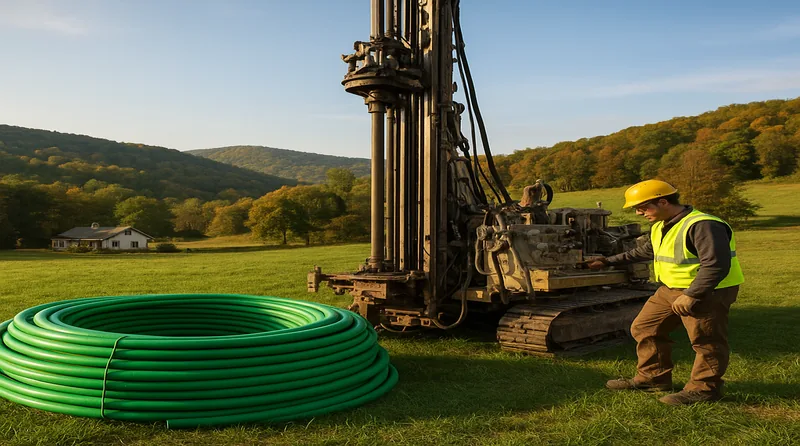
West Virginia's Heating Reality
West Virginia doesn't fit neatly into the standard geothermal pitch. No state tax credit. No rebate program. The most carbon-intensive grid in the United States. And a significant portion of homes on natural gas where geothermal payback stretches past 25 years.
But here's what makes WV interesting: a large share of homes — particularly older housing stock and manufactured homes throughout rural Appalachia — heat with electric baseboard or resistance heating. Replacing electric resistance with geothermal produces the most dramatic efficiency improvement of any fuel conversion. DOE data shows geothermal can reduce electricity consumption for heating by up to 75% compared to resistance. At WV's electricity rates (11.05¢/kWh, EIA 2024), that translates to roughly an 8–13 year payback — still one of the better cases in the country for a fuel conversion.
One more thing changed, and it matters here more than in most states: the 30% federal credit under IRC §25D applied only to systems placed in service through December 31, 2025. It is not available for property placed in service after that date (One Big Beautiful Bill Act, P.L. 119-21). The Inflation Reduction Act had scheduled 30% through 2032 with step-downs in 2033 and 2034; that schedule was repealed before taking effect. With no state credit and no rebate program, West Virginia homeowners outside USDA REAP eligibility now have essentially no incentive to apply — the 4–6 year baseboard payback we published previously assumed that credit.
Add the significant rural propane market in the southern coalfield counties, and you still have a state where geothermal makes clear financial sense for the right homes. It just takes a few more years to get there.
Quick Verdict: Should You Go Geothermal in West Virginia?
| Your Situation | Verdict | Typical Payback |
|---|---|---|
| Electric baseboard / resistance heat — anywhere in WV | ✅ Strong yes | 8–13 years — was 4–6 under the federal credit |
| Propane heat — southern coalfield counties, rural WV | ✅ Yes | 11–13 years — was 7–9 under the federal credit |
| New construction — anywhere in WV | ✅ Strong yes | ~13 years (incremental) — was 3–5 under the federal credit |
| USDA REAP eligible farm/rural business | ✅ Excellent | ~7 years — was 3–5 under the federal credit; still the best case in the state |
| Vacation rental — New River Gorge, Canaan Valley, Snowshoe | ✅ Yes — enhanced ROI | Longer than the 5–8 years published under the credit |
| Manufactured home on electric heat | ⚠️ Yes, with ductwork assessment | Longer than the 5–8 years published under the credit |
| Aging heat pump replacement (15+ years) | ⚠️ Compare at replacement time | Longer than the 8–12 years published under the credit |
| Natural gas — Charleston, Huntington, Morgantown | ❌ Not on payback alone | 47–78 years |
Payback figures reflect 2026 conditions with no federal tax credit. The 30% credit under IRC §25D applied to systems placed in service through December 31, 2025 and is not available for property placed in service after that date (One Big Beautiful Bill Act, P.L. 119-21). Earlier versions of this table showed shorter paybacks because they netted out that credit. USDA REAP was not repealed.
Find West Virginia Geothermal Installers
Connect with IGSHPA-certified installers serving your county. Compare quotes — especially important in WV's thinner contractor market.
Find WV Installers → Opens IGSHPA’s certified-member directory · we don’t collect your detailsDoes Geothermal Work in West Virginia?
| City / Region | HDD | CDD | Ground Temp (°F) | Primary Heating Fuel |
|---|---|---|---|---|
| Charleston / Kanawha Valley | 4,500 | 800 | 56–58 | Natural gas / Electric |
| Huntington / Ohio Valley | 4,300 | 850 | 56–58 | Natural gas / Electric |
| Morgantown / North-Central | 5,400 | 550 | 54–56 | Gas / Propane mix |
| Bluefield / Southern Highlands | 5,100 | 500 | 54–56 | Propane / Electric resistance |
| Southern Coalfields (McDowell, Mingo) | 4,800 | 700 | 55–57 | Propane / Electric baseboard |
| Eastern Panhandle (Martinsburg, Shepherdstown) | 4,600 | 750 | 55–57 | Gas / Propane / Electric mix |
Ground temperatures of 54–58°F support COP of 3.5–4.0 in heating mode — good efficiency. The colder northern and highland areas improve ROI through longer heating seasons. WV also has a meaningful cooling season in the valleys — Charleston at 800 CDD, Huntington at 850 — adding $150–$300/year in cooling savings that improve the case regardless of heating fuel.
Geology
West Virginia sits on the Appalachian Plateau — limestone, shale, and sandstone. Hard-rock geology means vertical closed-loop dominates. Most WV sites encounter bedrock within 50 feet. Vertical bores run 150–300ft per ton; a typical 3-ton system needs 3–4 boreholes totaling 450–900 bore-feet. Hard rock has excellent thermal conductivity (1.2–2.0 BTU/hr·ft·°F for limestone, 0.8–1.2 for shale/sandstone), which means fewer bore-feet per ton compared to soft-soil states.
Regional Installation Costs & Three-Scenario ROI
| Region | 3-Ton Vertical (2026 Out-of-Pocket) | Net Under the Old 30% Credit (2022–2025 installs) | Horizontal (if land allows) | Contractor Availability |
|---|---|---|---|---|
| Charleston / Kanawha Valley | $18,000–$26,000 | $12,600–$18,200 | $13,000–$20,000 | Best in WV — regional hub |
| Morgantown / North-Central | $18,000–$27,000 | $12,600–$18,900 | $13,000–$20,000 | Moderate — PA border contractors also serve |
| Huntington / Ohio Valley | $17,000–$25,000 | $11,900–$17,500 | $12,000–$19,000 | Moderate — OH/KY border access |
| Southern Coalfields | $19,000–$28,000 | $13,300–$19,600 | Limited by terrain | Thin — travel premium from Charleston/VA |
| Eastern Panhandle | $18,000–$26,000 | $12,600–$18,200 | $13,000–$20,000 | Moderate — VA/MD contractors also serve |
The middle column is historical only. §25D applied to property placed in service through December 31, 2025 and is not available after that date, so the left-hand column is what a 2026 install actually costs you. WV has no state credit or rebate to substitute.
Scenario 1: Replacing Electric Baseboard — Best Case in the Country
- Annual electric baseboard cost (2,000 sq ft): ~$2,000–$3,000/year
- Geothermal cost: ~$525–$790/year (COP 3.8 at 11.05¢/kWh)
- Annual savings: ~$1,625–$2,510/year (heating + cooling)
- Payback (~$21,000 out of pocket, no federal credit): ~8–13 years (was 4–6 years on the ~$14,700 net figure the 30% credit produced)
Scenario 2: Replacing Propane — Strong Case
- Annual propane cost: ~700 gal × $3.00 = ~$2,100/year
- Geothermal cost: ~$525–$600/year
- Annual savings: ~$1,650–$1,825/year
- Payback (~$21,000 out of pocket, no federal credit): ~11–13 years (was 7–9 years on the ~$14,700 net figure the 30% credit produced)
Scenario 3: Replacing Natural Gas — Honest Assessment
- Annual gas cost: ~600 therms × $1.20 = ~$720/year
- Geothermal cost: ~$525–$600/year
- Annual savings: ~$270–$445/year
- Payback (~$21,000 out of pocket, no federal credit): ~47–78 years. We won't dress this up — and the federal repeal made a bad case worse.
25-Year Total Cost of Ownership
| Heating System | 2026 Install Out-of-Pocket | 25-yr Operating | 25-yr Total |
|---|---|---|---|
| Geothermal (no federal credit available) | $18,000–$26,000 | $13,000–$19,500 | $31,000–$45,500 |
| Electric baseboard | $500–$2,000 | $50,000–$75,000 | $50,500–$77,000 |
| Propane furnace + AC | $4,500–$7,000 | $52,500–$62,500 | $57,000–$69,500 |
| Gas furnace + AC | $5,000–$8,000 | $22,000–$27,000 | $27,000–$35,000 |
Electric baseboard's $50,000–$77,000 in operating cost over 25 years is the number that still makes geothermal's case in WV. An $18,000–$26,000 capital investment replaces $50,000+ in future electricity bills. Under the 30% federal credit that install line was $12,600–$18,200 and the 25-year total was $25,600–$37,700 — that credit applied only to property placed in service through December 31, 2025.
About the examples below
The homes in these examples are representative scenarios, not real customers. We do not install geothermal systems and we have not visited these properties. Each scenario models a typical home for the area using real equipment pricing, local fuel and electricity rates, and the incentive programs described above — but the house, the owner and the invoice are constructed to show how the arithmetic works. Treat them as worked examples, and get quotes for your own home before budgeting.
West Virginia Case Studies
Case Study 1: McDowell County Electric Baseboard Home — 6.0-Year Incremental Payback
- Location: Outside Welch, McDowell County (southern coalfield, Appalachian hard rock)
- Home: 1,800 sq ft ranch, 1972 construction, electric baseboard heat + window AC units
- Prior energy: Electric baseboard — $2,650/year heating + $280/year window AC = $2,930/year total
- System installed: 3-ton vertical closed-loop (3 × 250ft boreholes in sandstone/shale)
- Gross cost: $22,000 (includes electrical panel upgrade from 100A to 200A)
- Federal ITC (Section 25D): $0 — expired for property placed in service after Dec 31, 2025
- 2026 out-of-pocket: $22,000
- Annual geo operating cost: ~$680/year electricity (heating + cooling + DHW via desuperheater)
- Annual savings: $2,930 − $680 = $2,250/year
- Simple payback: $22,000 ÷ $2,250 = 9.8 years (full system) / 6.0 years (incremental vs. replacing electric system + adding central AC = ~$8,500 baseline)
The 200A panel upgrade added ~$2,500 to the project — but was needed regardless for a modern HVAC system. This homeowner went from $245/month average energy bills to $57/month — a life-changing reduction in a county where median household income is ~$24,000. This project was placed in service in 2025 and did capture the 30% credit, which netted the cost to $15,400 (6.8 years full / 4.8 years incremental) and took 3 years to fully absorb against McDowell County's lower tax liabilities. A neighbor installing the identical system in 2026 pays the full $22,000 — §25D is not available for property placed in service after December 31, 2025.
Case Study 2: Morgantown New Construction — 12.6-Year Incremental Payback
- Location: Monongalia County (north-central WV, near WVU campus)
- Home: 2,600 sq ft new construction, planned as rental property near university
- Baseline comparison: High-efficiency gas furnace + central AC = $13,500 installed
- Geothermal system cost: $24,500 gross (3.5-ton vertical, 3 × 270ft in sedimentary rock)
- Federal ITC (Section 25D): $0 — expired for property placed in service after Dec 31, 2025 (and a pure rental never qualified for §25D regardless — see the note below)
- 2026 geothermal out-of-pocket: $24,500
- Incremental cost vs. gas HVAC: $24,500 − $13,500 = $11,000 incremental
- Annual geo operating cost: ~$580/year
- Annual gas HVAC cost would have been: ~$1,450/year (gas + AC electricity, 5,400 HDD)
- Annual savings vs. gas: $1,450 − $580 = $870/year
- Incremental payback: $11,000 ÷ $870 = 12.6 years (the 4.2-year figure we published previously assumed a 30% federal credit)
New construction still improves the economics — even in a gas market — but the federal repeal moved this from a 4-year to a 13-year proposition. The owner locks in $870/year savings from day one. As a rental property, the "geothermal heated — low utility costs" marketing is genuine and attracts quality tenants. Morgantown's cold winters (5,400 HDD) mean tenants save meaningfully vs. gas-heated rentals in the area.
Tax note: this is a business-use property. Residential §25D never applied to pure rentals, and it is now gone for everyone. Business-use systems fall under the separate Section 48 commercial credit — a distinct provision with its own rules. Ask a tax professional what §48 provides for your placed-in-service year.
Month-by-Month Energy Profile
Based on the McDowell County electric baseboard home (Case Study 1 baseline, 1,800 sq ft):
| Month | Old Baseboard + AC | Geothermal Cost | Monthly Savings | Notes |
|---|---|---|---|---|
| January | $395 | $105 | $290 | Peak heating — electric baseboard $0.395/month is devastating |
| February | $360 | $95 | $265 | Cold mountain month |
| March | $245 | $70 | $175 | Heating tails off |
| April | $100 | $35 | $65 | Light conditioning |
| May | $45 | $25 | $20 | Minimal — DHW savings from desuperheater |
| June | $65 | $40 | $25 | Cooling ramp-up — COP 5.0+ |
| July | $90 | $50 | $40 | Valley heat — window AC was $90/mo before |
| August | $80 | $48 | $32 | Cooling + desuperheater peak |
| September | $50 | $30 | $20 | Cooling tails off |
| October | $145 | $45 | $100 | Heating ramp-up |
| November | $310 | $80 | $230 | Heavy heating resumes |
| December | $375 | $98 | $277 | Near-peak — baseboard electricity crushing |
| Annual Total | $2,260 | $721 | $1,539 |
At 11.05¢/kWh. The winter months show why electric baseboard is so punishing — January alone costs $395 on resistance vs. $105 on geothermal. The 75% reduction DOE cites is clearly visible in the heating months.
Open-Loop System Assessment by Region
| Region | Open-Loop Viability | Key Considerations |
|---|---|---|
| Charleston / Kanawha Valley | ⚠️ Site-specific | Some alluvial deposits with adequate yield. Coal-era contamination risk — test water quality first. |
| Morgantown / North-Central | ⚠️ Site-specific | Marcellus area — some sandstone yields adequate. Verify water chemistry (acid mine drainage risk). |
| Southern Coalfields | ❌ Generally not recommended | Extensive historic mining activity. Water quality frequently compromised. Closed-loop strongly preferred. |
| Eastern Panhandle | ✅ Often viable | Limestone/karst geology with good yields. Best open-loop territory in WV. DEP permit required. |
| Greenbrier Valley | ⚠️ Karst caution | Greenbrier limestone yields well but karst interconnections make discharge sensitive. DOW review essential. |
| Ohio River Valley (Wheeling, Parkersburg) | ⚠️ Site-specific | River-adjacent alluvial deposits may yield. Industrial/mining legacy requires water testing. |
For most WV sites, closed-loop is the lower-risk default. Historic coal mining activity has affected groundwater quality across much of the state. The eastern panhandle (Martinsburg, Shepherdstown, Lewisburg) is the notable exception — its limestone aquifers can support efficient open-loop systems where water quality tests pass.
Loop Type Cost Comparison
| Loop Type | Typical WV Cost (3-ton) | Land Needed | Best For | WV Notes |
|---|---|---|---|---|
| Vertical closed-loop | $17,000–$28,000 | Small — 15×15 ft per bore | Mountain terrain, suburban lots | Standard for WV; hard rock = fewer feet but slower drilling |
| Horizontal slinky | $12,000–$20,000 | ½–1 acre flat ground | Valley farms, river-bottom lots | 30–40% cheaper where terrain allows — limited in mountain counties |
| Horizontal straight | $11,000–$18,000 | 1–2 acres minimum | Large valley-bottom farms | Cheapest option; rare in WV due to terrain |
| Pond/lake loop | $13,000–$20,000 | ½+ acre pond, 8ft+ depth | Farm ponds, reservoir-adjacent | Excellent if available; WV farm ponds common in valleys |
| Open-loop | $14,000–$22,000 | Existing well + discharge | Eastern Panhandle limestone aquifers | Avoid in coal-mining areas; water quality testing mandatory |
Incentives and Financing
| Incentive | Amount | Status | Contact / Source |
|---|---|---|---|
| Federal ITC (Section 25D) | 0% (expired) | ❌ Expired — applied to property placed in service through Dec 31, 2025 only (OBBBA, P.L. 119-21) | IRS — Residential Clean Energy Credit |
| WV state incentive | — | ❌ None as of 2026 | N/A |
| Appalachian Power (AEP WV) | Varies | (unverified) | appalachianpower.com |
| Mon Power / FirstEnergy | Varies | (unverified) | monpower.com |
| USDA REAP (farms/rural biz) | 25–50% grant | ✅ Active program | USDA Rural Dev. WV Office |
WV-specific note: with no state credit, no rebate program, and the federal §25D credit expired for property placed in service after December 31, 2025, most West Virginia homeowners now have no geothermal incentive to apply. USDA REAP is the exception for agricultural and rural-business properties. Budget the full installed cost and treat any quote that nets out a federal credit as a red flag.
If your system was placed in service on or before December 31, 2025: the credit is nonrefundable and can only reduce your federal tax liability to zero, but unused portions still carry forward. Lower-income WV homeowners (especially in southern coalfield counties) may need 2–3 years to fully capture a $6,000–$8,000 credit that way. It is not lost — it rolls forward until used.
Solar + Geothermal Stacking Strategy
West Virginia's solar potential is moderate — 4.0–4.5 peak sun hours/day, lower than the Southwest but workable. The stacking math for electric-baseboard homes is particularly compelling:
- Geothermal alone: Reduces electric heating by 75% — from $2,650/yr to ~$680/yr
- 4–5 kW solar array: roughly $10,000–$13,000 out of pocket in 2026 — solar fell under the same §25D credit as geothermal and lost it on the same date, so the ~$7,000–$9,000 net figure we published previously no longer applies. It can still offset most or all geo electricity
- Combined effect: Near-zero energy cost for heating and cooling — complete independence from coal-grid electricity bills
- Combined payback: Longer than the 7–10 years published under the credit, since neither system draws a federal credit for property placed in service after December 31, 2025 — but total energy independence on a coal grid has particular appeal
For gas homes where geo payback is already 47–78 years, adding solar doesn't change the fundamental economics. Solar + geo combined makes sense primarily for baseboard and propane homes where the base savings are already strong.
WV's net metering rules (under HB 2001, updated 2020) allow residential solar up to 25 kW — sufficient for combined solar + geo. Check with your utility for current interconnection requirements.
Vacation Rental & Second Home Analysis
West Virginia's adventure tourism economy — New River Gorge National Park, Canaan Valley, Snowshoe Mountain, Seneca Rocks — creates genuine geothermal opportunities for vacation properties:
- New River Gorge cabins: Fayette and Raleigh counties. Propane-heated, high summer demand (rafting season), significant shoulder seasons (fall foliage, spring climbing). Geothermal eliminates propane delivery logistics to remote mountain sites.
- Canaan Valley / Davis area: Tucker County, 4,000+ feet elevation, 5,500+ HDD. Propane or electric heat. Geothermal's efficient cooling is a genuine summer amenity in a market positioning itself as a year-round destination.
- Snowshoe Mountain rental properties: Pocahontas County. Winter ski demand + summer mountain biking. "Eco-friendly geothermal heated" is a genuine listing differentiator as Snowshoe's rental market becomes more competitive.
- Eastern Panhandle (Shepherdstown, Harpers Ferry): Growing DC-commuter and weekend-getaway market. Higher property values support the geothermal investment. Limestone geology often suitable for open-loop.
Tax Treatment
Vacation rental properties generating income may qualify for MACRS depreciation (5-year accelerated schedule for energy property). The residential 30% §25D credit is not part of that picture anymore — it applied only to property placed in service through December 31, 2025, and it never covered pure rentals in any case. Business-use systems fall under the separate Section 48 commercial credit, a distinct provision with its own rules. Consult a tax professional about both §48 and the mixed-use property rules (personal-use days vs. rental days).
USDA REAP for WV Agricultural Properties
West Virginia's agriculture — cattle, hay, poultry, and small-scale diversified farms — makes REAP relevant for many rural properties. Southern WV farms transitioning from coal-economy dependence are natural candidates.
REAP Math: Greenbrier County Farm Example
| Item | Amount |
|---|---|
| 4-ton vertical system (farmhouse + poultry barn climate control) | $26,000 |
| USDA REAP grant (25%) | −$6,500 |
| Federal ITC (Section 25D) | $0 — expired for property placed in service after Dec 31, 2025 |
| 2026 out-of-pocket after REAP | $19,500 |
| Annual propane savings (farm + house) | $2,800/year |
| Payback | 7.0 years |
A 50% REAP grant drops out-of-pocket to $13,000 and payback to 4.6 years. REAP was not repealed — only the federal §25D component came out; under the old rules this same stack netted $13,650 (4.9 years), or $7,150 and 2.6 years with a 50% grant. Note that a farm is business use, which falls under the separate Section 48 commercial credit rather than residential §25D — confirm with a tax professional. Apply through the USDA Rural Development WV State Office.
The Federal Tax Credit (IRS Form 5695) — Expired After 2025
If your West Virginia system is placed in service in 2026, there is no federal residential credit to claim. The 30% §25D credit applied to property placed in service through December 31, 2025 and is not available after that date (One Big Beautiful Bill Act, P.L. 119-21). With no WV state credit and no rebate program, that means most West Virginia homeowners now budget the full installed cost.
The steps below apply only to systems placed in service on or before December 31, 2025:
- Confirm the placed-in-service date. That is when installation was completed, not when you signed the contract. On or before December 31, 2025 qualifies; after that does not.
- Confirm system eligibility. ENERGY STAR certified ground-source heat pump installed at your primary or secondary residence. Rental-only properties never qualified for Section 25D — business use falls under the separate Section 48 commercial credit.
- Gather documentation. Itemized installer invoice (equipment, labor, drilling, materials), ENERGY STAR/AHRI certificate, proof of residence.
- Complete IRS Form 5695, Part I. Enter total installed cost on Line 12a. Subtract any REAP grants — only net out-of-pocket qualified for the credit. Multiply by 0.30; there was no dollar cap.
- Transfer to Form 1040. Credit flows to Schedule 3, Line 5 — reduces tax liability dollar-for-dollar.
- Handle carryforward. The credit is nonrefundable. If your annual federal tax liability is less than the credit, unused portions from a qualifying year still carry to subsequent years. WV-specific: Many coalfield-county homeowners have lower tax liability — plan for a 2–3 year capture timeline.
- Retain records. Keep installer invoice, ENERGY STAR cert, permits, and any REAP correspondence for 7+ years.
The Coal Grid Reality
West Virginia's electric grid generates approximately 1,912 lbs CO₂ per MWh — ranked #1 in the United States for grid carbon intensity. Nearly all of WV's electricity comes from coal.
- Replacing propane or oil: Geothermal dramatically reduces carbon even on WV's coal grid. The COP efficiency multiplier means far less total fuel per unit of heat delivered.
- Replacing electric resistance: You're still on coal, but using 75% less of it. Significant net carbon reduction.
- Replacing natural gas: The carbon math is nuanced and depends on specific utility emissions. Not a clear carbon win for gas homes on WV's current grid.
The primary case for geothermal in West Virginia is economic, not environmental. The energy cost savings are real and substantial. The carbon story is mixed depending on starting fuel. We'd rather be straight about it.
Marcellus Shale: What You Actually Need to Know
Northern WV — Wetzel, Tyler, Doddridge, Ritchie, Roane counties — sits in active Marcellus Shale territory. Homeowners sometimes wonder about conflicts with geothermal drilling.
No direct conflict. Marcellus Shale in WV sits at 5,000–8,500 feet. Geothermal loops go 150–400 feet. No physical overlap.
The nuance: in heavily drilled areas, some Appalachian formations show natural gas migration at shallower Devonian depths (1,000–2,500 feet) — still well below geothermal range but worth asking your installer about if you're in an active drilling zone. IGSHPA-certified contractors are familiar with these considerations.
Geothermal and Manufactured Homes
West Virginia has ~20% manufactured housing — among the highest rates nationally. These homes are often where electric baseboard heat is most concentrated. Geothermal can work in manufactured homes, with attention to:
- Ductwork: Manufactured home ducts sized for high-temp electric furnaces may need modification for geothermal's lower supply-air temperatures.
- Electrical service: Geothermal needs 200A. Older manufactured homes may have 100A or 60A panels — budget $2,000–$3,000 for upgrade.
- Duct sealing: Manufactured home ductwork frequently leaks. Seal before installing geo — improves performance regardless.
- ROI still works, but check it: the baseboard-to-geo conversion runs 8–13 years now that the federal credit has expired, and $3,000–$5,000 in prep costs pushes it toward the top of that range. That's a real investment horizon rather than the sub-8-year number we published when §25D still applied — make sure it fits how long you plan to stay.
Permitting in West Virginia
- Licensed well driller: Required under WV Code Chapter 22, Article 9 for all borehole installations. Confirm your installer holds this license.
- WV DEP Office of Water Resources: Regulates groundwater use for open-loop systems. Coal-mining areas may trigger additional review.
- Local building permits: Mechanical and electrical permits from county/municipality. Budget $200–$500.
Finding a Qualified WV Installer
WV's contractor market is thinner than neighboring mid-Atlantic states. Start with IGSHPA's directory. Contractors may operate from Charleston, Morgantown, or bordering VA/PA/OH markets and travel into WV.
Key questions for WV:
- WV licensed well driller certification?
- Experience in this county's hard-rock geology?
- For older homes: ductwork compatibility assessment?
- For manufactured homes: prior manufactured-home installation experience?
- References from similar WV installations in the past 18 months?
West Virginia vs. Neighboring States
| Factor | WV | VA | PA | KY | OH | MD |
|---|---|---|---|---|---|---|
| Electricity rate | 11.05¢ | 15.94¢ | 12.51¢ | 10.07¢ | 11.29¢ | 15.04¢ |
| Grid CO₂ (lbs/MWh) | ~1,912 | ~604 | ~893 | ~1,744 | ~1,005 | ~604 |
| State incentive | None | None | Utility (unverified) | None | None | EmPOWER (unverified) |
| Baseboard payback (as published under the old federal credit) | 4–6 yr | 5–8 yr | 5–7 yr | 7–11 yr | 5–8 yr | 4–6 yr |
| Propane payback (as published under the old federal credit) | 7–9 yr | 7–10 yr | 7–9 yr | 7–9 yr | 8–12 yr | 6–8 yr |
| 2026 payback (no federal credit) | Baseboard 8–13 yr / propane 11–13 yr | Longer than the rows above in every state — the §25D repeal was federal and hit all of them equally. See each state's guide for its recomputed figures. | ||||
| Best scenario | Electric baseboard | SW propane | Philly oil belt | E. KY propane | SE propane | E. Shore oil |
WV's unique position: The strongest electric-baseboard-to-geothermal payback of any neighboring state. WV has both the cheap electricity to keep operating costs low AND the large electric-resistance housing stock to create high savings. The coal grid makes the carbon case complicated — but the financial case for baseboard and propane homes remains among the best in the eastern US, even though the federal §25D repeal (which applies nationwide, not just here) pushed every payback in this table out by several years.
Frequently Asked Questions
Electric baseboard is 100% efficient by definition — 1 unit of electricity = 1 unit of heat. A geothermal system at COP 3.8 delivers 3.8 units of heat per unit of electricity. You're getting nearly 4× the heating from the same electricity. On a $2,500/year baseboard bill, you're saving $1,800+ annually. That's why payback is 8–13 years even at the full installed cost — the efficiency gap between resistance and geothermal is the largest of any fuel comparison. (It was 4–6 years when the 30% federal §25D credit still applied; that credit covered only property placed in service through December 31, 2025.)
Yes, with some preparation. Your ductwork may need modification for geothermal's lower supply-air temperatures, and you'll likely need a 200A electrical panel (older manufactured homes often have 100A or less). Budget $2,000–$5,000 for these upgrades. Even with that added cost, the baseboard-to-geothermal conversion still pays back — around 8–13 years now that the federal §25D credit has expired for property placed in service after December 31, 2025, versus the sub-8-year figure we published when it applied. Get a full assessment from an installer experienced with manufactured housing.
It depends on what you're replacing. For electric baseboard homes: yes, you reduce coal consumption by 75% — a significant environmental win. For propane and oil: yes, geothermal's efficiency multiplier means less total fossil fuel per BTU even on a coal grid. For natural gas: the carbon math is complicated — direct gas combustion is actually lower-carbon than coal-grid electricity in many scenarios. The primary argument for WV geothermal is economic, not environmental. The grid will decarbonize over the 25-year system life, improving the environmental case over time.
No. Marcellus Shale sits at 5,000–8,500 feet. Geothermal loops go 150–400 feet. There is zero physical overlap. In heavily drilled areas, ask your installer about shallower Devonian formations — still well below geothermal range but worth awareness. Your IGSHPA-certified contractor will be familiar with these distinctions.
On pure payback, no — 47–78 years now that the 30% federal §25D credit has expired for property placed in service after December 31, 2025 (it was 25–33 years with the credit). Natural gas in Charleston is cheap. Geothermal makes financial sense here only at HVAC system replacement time (comparing incremental cost vs. new gas furnace + AC) or in new construction. If you're building new, the incremental cost of choosing geothermal over gas HVAC is modest and the operating savings compound for 30 years. For existing gas homes, this isn't a financial investment — it's a lifestyle choice.
No — and the federal one is gone too. West Virginia has no state tax credit, rebate, or incentive program for residential geothermal as of 2026, and the federal 30% credit (Section 25D) applied only to property placed in service through December 31, 2025 (One Big Beautiful Bill Act, P.L. 119-21). That means most WV homeowners have no incentive to apply and should budget the full installed cost. Some utilities (Appalachian Power, Mon Power) may offer efficiency rebates — call your utility to verify. USDA REAP grants (25–50%) remain available for agricultural and rural business properties and were not affected by the federal repeal.
Appalachian hard rock (sandstone, shale, limestone) drills slower than soft-soil states, adding $3–$6/foot to drilling costs. But hard rock has better thermal conductivity — you need fewer total bore-feet per ton. WV's lower labor costs partially offset the drilling premium. Net effect: WV installations run $17,000–$28,000 for a 3-ton vertical — competitive with neighboring states despite the harder drilling.
Only in the right locations. The eastern panhandle (Martinsburg, Shepherdstown, Lewisburg) has limestone aquifers that often support open-loop. Avoid open-loop in southern coalfield counties — historic mining has compromised water quality across large areas. Most WV installers default to closed-loop, which works universally regardless of water conditions. Always test well water before considering open-loop.
Yes — especially if it's propane-heated. You eliminate propane delivery logistics to remote mountain sites, provide comfortable year-round climate control (summer rafting season cooling is a real amenity), and "eco-friendly geothermal heated" is a genuine VRBO/Airbnb differentiator as the New River Gorge National Park market grows. Payback runs longer than the 5–8 years we published for propane vacation cabins under the old federal credit, which expired for property placed in service after December 31, 2025. MACRS depreciation and the separate Section 48 commercial credit may still accelerate the financial return for rental properties — §48 is a different provision from the residential §25D credit, so consult a tax professional about what it offers for your placed-in-service year.
Electric-baseboard homes in any part of WV have the best ROI — 8–13 year payback regardless of region, down from the 4–6 years we published when the federal §25D credit still applied to property placed in service through December 31, 2025. For propane homes, the southern coalfields (McDowell, Mingo, Logan, Wyoming counties) and rural mountain areas have the strongest case due to high HDDs and complete lack of gas infrastructure. Weakest: Charleston, Huntington, and Morgantown homes on natural gas (47–78 years).
Bottom Line: Who Should Consider Geothermal in West Virginia
Strong candidates:
- Electric baseboard/resistance homes — 8–13 year payback, strongest ROI case in the state and still one of the better ones in the country
- Propane-heated rural homes (southern coalfields, mountain counties) — 11–13 year payback
- New construction — modest incremental cost, 30-year operating advantage even in gas markets
- Agricultural properties eligible for USDA REAP — around 7 years, or under 5 with a 50% grant; REAP was not repealed
- New River Gorge / Canaan Valley / Snowshoe vacation rentals — rental income premium + propane elimination
All figures reflect 2026 conditions with no federal tax credit. The 30% §25D credit applied to property placed in service through December 31, 2025 only, and each of these paybacks ran several years faster while it did.
Think carefully:
- Gas homes in Charleston, Huntington, Morgantown — 47–78 year payback on cheap gas
- Manufactured homes — possible but require ductwork and electrical assessment first
- Properties in coal-mining areas considering open-loop — test water quality, default to closed-loop
Ready to Explore Geothermal for Your WV Home?
Get at least two quotes — in WV's thinner market, comparing approaches tells you a lot about installer expertise.
Find IGSHPA-Certified Installers → Opens IGSHPA’s certified-member directory · we don’t collect your detailsFor neighboring state comparisons, see our Virginia guide, Pennsylvania guide, Kentucky guide, and Ohio guide. For the propane analysis, see our geothermal vs. propane comparison.
🎬 Video: Geothermal in West Virginia
Coming soon — Chuck the Contractor will tour a real WV installation, covering the electric-baseboard-to-geothermal conversion and Appalachian hard-rock drilling realities.
Sources
- EIA — West Virginia Electricity Profile (11.05¢/kWh, 2024; grid CO₂ #1 in US)
- EIA — State CO₂ Emissions from Electricity Generation
- DOE EnergySaver — Geothermal Heat Pumps (75% efficiency vs. resistance)
- NOAA — U.S. Climate Normals (WV HDD/CDD by station)
- WV DEP — Office of Water Resources (groundwater/open-loop regulations)
- IRS — Residential Clean Energy Credit (Section 25D) — 30% credit applied to property placed in service through Dec 31, 2025; not available after that date (OBBBA, P.L. 119-21). Verified July 2026.
- ENERGY STAR — Geothermal Heat Pump Federal Tax Credits (historical reference for 2022–2025 installs)
- IGSHPA — Find a Certified Geothermal Contractor
- Appalachian Power — Energy Efficiency Programs
- USDA — Rural Energy for America Program (REAP)
- DSIRE — West Virginia Incentives and Policies
- GeoExchange — Geothermal Basics
- U.S. Census — West Virginia QuickFacts
Figures marked (unverified) are our best reading of program documentation that we were not able to confirm independently. Rebate and incentive terms change often — confirm current amounts with the utility or program administrator before you budget against them.